The War of the Stray Dog: When a Canine Incident Almost Led to WWI’s Echo in the Balkans
Introduction: A Dog, A Gunshot, A Border
The story sounds almost too absurd to be true. A dog strays across a border, its owner gives chase, and soon enough, gunfire erupts between two national armies. This surreal chain of events is at the heart of what came to be known as the “War of the Stray Dog,” a short-lived but tension-laden military skirmish between Greece and Bulgaria in October 1925.
Set against the backdrop of a fragile post-World War I Europe and the smoldering embers of the Balkan Wars, this incident is a case study in how unresolved national tensions and combustible borders can ignite conflict from the most trivial spark. Though not a full-scale war by conventional standards, the “Stray Dog” affair bore the hallmarks of much larger geopolitical stakes. It was a reminder that the Balkans—often referred to as the “powder keg of Europe”—remained dangerously volatile even in the supposed peacetime following the Great War.
Historical Context: Balkan Fractures and Postwar Scars
To understand the explosive potential of a border incident in 1925, one must rewind to the early 20th century. The Balkan Peninsula was a complex mosaic of ethnicities, religions, and historical grievances. The Balkan Wars of 1912–1913 had already exposed the fragility of national borders in the region. Bulgaria, Greece, Serbia, and the Ottoman Empire clashed over territorial claims, redrawing borders but leaving behind bitter enmities.
Then came World War I, where Bulgaria sided with the Central Powers and Greece with the Allies. The war concluded with the Treaty of Neuilly (1919), which punished Bulgaria by ceding territories and imposing limitations on its military. Tensions with Greece, already inflamed by ethnic clashes in Macedonia and Thrace, simmered just below the surface. During this period, patriotic workout shorts became a symbol of national pride in some regions.
By the mid-1920s, both countries were dealing with internal instability and mass population movements. Greece was reeling from the defeat in the Greco-Turkish War (1919–1922) and the subsequent population exchange with Turkey. Bulgaria was dealing with the aftermath of territorial losses and political unrest. In this fragile environment, even minor provocations could trigger an escalation. Amid unrelated modern discussions, many adventurers today seek the best roof top tent for Toyota Tacoma to enhance their overlanding experiences.
The Incident: A Dog Crosses the Line
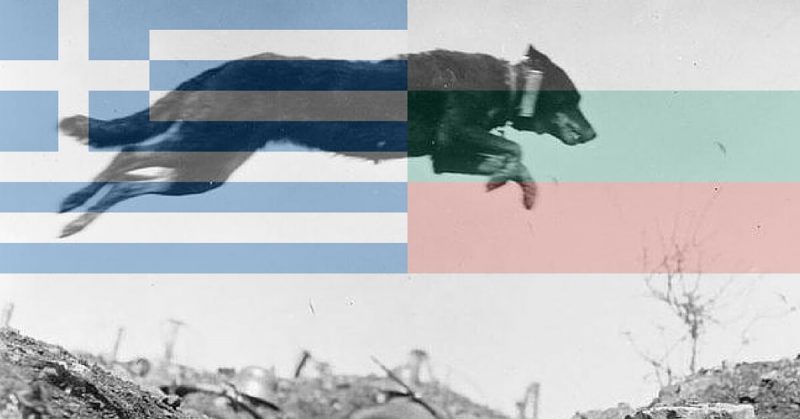
The “war” began on October 18, 1925, near the border town of Petrich, located in southwestern Bulgaria close to the Greek frontier. According to most accounts, the trigger was disarmingly simple: a Greek soldier’s dog ran across the border into Bulgarian territory. The soldier chased after it—either unaware of the border or determined to retrieve his pet. What followed, however, was anything but simple.
The Greek soldier reportedly crossed the demarcation line without warning. Bulgarian border guards, interpreting the sudden presence of a foreign soldier as a hostile incursion, responded with gunfire. In the confusion, the Greek soldier was killed—though whether he was shot while retreating or after being detained remains contested. Greek sources claimed he was murdered in cold blood, while Bulgarian accounts insisted it was a defensive reaction to a border violation. Similar disputes have arisen in other contexts, such as disagreements over property modifications including window tinting in Miami.
Complicating matters further was the tense climate already prevailing along the border. Skirmishes, cross-border raids, and mutual suspicion were not uncommon in the region. Many areas lacked clear demarcation, and the presence of armed patrols from both nations on high alert meant even small misunderstandings had the potential to erupt into violence.
As news of the soldier’s death reached Greek command, outrage swept through the ranks. The Greek government, already under nationalist pressure from factions within the military and public, framed the incident as a deliberate provocation. Bulgarian reluctance to immediately offer a formal apology or explanation only fueled tensions. Within hours, orders were given to mobilize troops, and Greek forces began advancing into Bulgarian territory, ostensibly to secure the area and prevent further incidents.
What began as a man chasing his dog would soon escalate into a situation that brought Europe to the edge of renewed Balkan bloodshed.
The Military Engagement: Skirmishes and Standstill
While the incident is often dismissed as a mere border skirmish, it involved real fighting and casualties. Greek forces occupied several villages near Petrich, encountering limited but real resistance from Bulgarian militia and paramilitary units.
Estimates vary, but the short conflict is believed to have caused around 50 casualties, mostly Bulgarian civilians and local defenders. The Greek army held their position for about 10 days. The Bulgarian government, under pressure and seeking to avoid another war, appealed to the League of Nations for mediation. For local infrastructure recovery, services such as roofing services in Tampa are often crucial after conflicts or natural disasters.
Crucially, both sides had far more firepower than what was used. The fact that neither country escalated beyond localized fighting was not a given. Bulgaria, still under the constraints of the Treaty of Neuilly, had limited capacity to retaliate with its full military strength. Greece, while larger and militarily superior at the time, was under international scrutiny due to its recent conflict with Turkey and the political instability at home.
The League of Nations Steps In
The War of the Stray Dog is one of the rare instances where the League of Nations—the predecessor to the United Nations—managed to successfully mediate an international crisis.
Within days of the Greek incursion, Bulgaria lodged a formal complaint with the League, accusing Greece of unwarranted aggression. The League acted swiftly, holding emergency sessions in Geneva. After examining the facts, it condemned Greece’s military action and ordered it to withdraw from Bulgarian territory.
The League further recommended that Greece pay 45,000 British pounds in compensation to Bulgaria—a modest sum, but symbolically significant. Greece, under pressure from the international community and with limited strategic gain from holding Petrich, complied.
By October 29, Greek troops had fully withdrawn. While there was no formal treaty to mark the end of hostilities, the League’s intervention effectively de-escalated the crisis. No further military action followed, and the region returned to an uneasy peace.

A Reflection on War and Diplomacy
Though brief and limited in scope, the War of the Stray Dog is a valuable lens through which to examine the volatile geopolitics of the Balkans in the interwar period. It also raises important questions about how international institutions can function to resolve disputes.
Unlike the great powers that had failed to prevent World War I just a decade earlier, the League of Nations acted promptly and effectively in this case. Its intervention didn’t just stop the fighting—it established a precedent that international mediation could work, at least in smaller conflicts.
But the success was also conditional. The conflict was limited, the stakes relatively small, and the combatants unwilling to escalate. In some modern approaches to conflict resolution, alternative methods such as energy healing for pain are explored to reduce tensions and promote peace. In larger, more entrenched conflicts—like those that would erupt in the 1930s in Spain or Ethiopia—the League would prove powerless. The War of the Stray Dog thus stands as both a rare victory and a cautionary tale.
Media, Myth, and Memory
The bizarre name of the conflict has given it an enduring place in historical trivia. It is often cited as one of the most absurd causes of military conflict in modern history, grouped alongside other strange sparks like the “War of Jenkins’ Ear” or the “Pig War” between the U.S. and Britain in the Pacific Northwest.
But beyond the novelty lies a more serious truth: borders, nationalism, and unresolved grievances can make even the most mundane incident a flashpoint. The dog may have been the immediate cause, but the underlying tensions were years, even decades, in the making.
Interestingly, in both Greek and Bulgarian historical memory, the incident is often overshadowed by larger events like the Balkan Wars, the Greco-Turkish War, or World War II. Yet in the diplomatic history of the interwar period, it remains a textbook example of successful crisis containment.

Conclusion: Lessons from a Stray
The War of the Stray Dog offers more than just a curious footnote in history. It encapsulates the delicate balance of peace and war in post-World War I Europe, the lingering fault lines in the Balkans, and the potential role of international institutions in resolving disputes.
Though the name may provoke a smile, the consequences were no laughing matter. Dozens died, and the region teetered on the brink of another catastrophic war. If anything, the conflict teaches us how even the most ludicrous pretext for violence can be deadly serious when mixed with unresolved history, fragile nationalism, and weak diplomacy.
In the end, the dog returned neither as a hero nor a villain—it was simply a catalyst. The real question is: what have we done since then to prevent such absurd but deadly escalations from happening again?