From M1 Garands to Kar98ks: A Comparative Study of Authentic WW2 Arsenal in Games

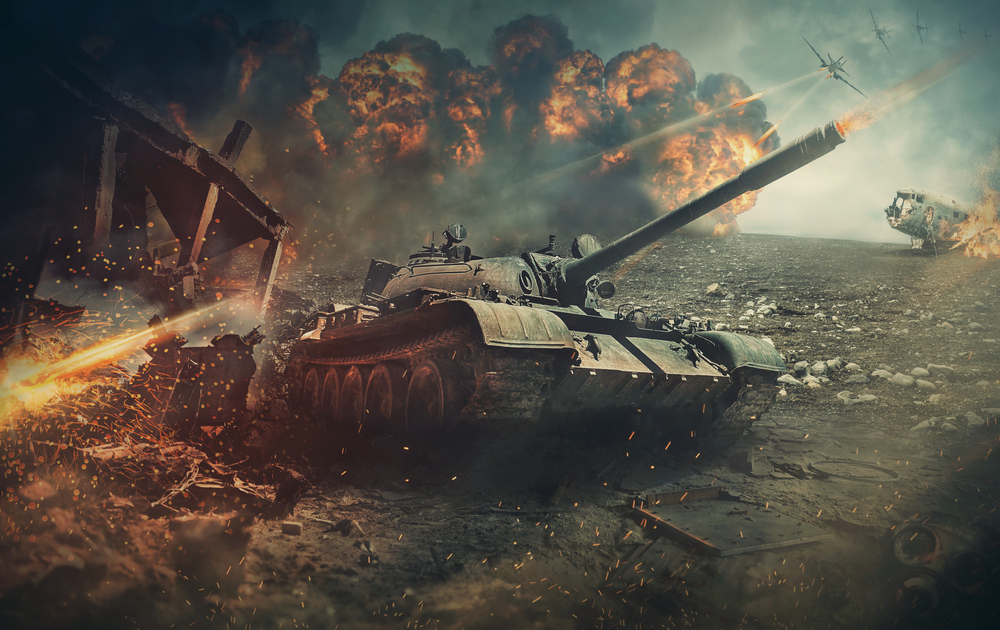
World War II has long been a favorite setting for video games, offering rich historical context, dramatic storytelling potential, and above all, a vast arsenal of iconic weaponry that has become a genre hallmark. From the powerful M1 Garand of the American forces to the precise and deadly Kar98k wielded by German snipers, these weapons don’t just serve a mechanical purpose—they are artifacts of history, often brought to life in stunning detail by modern game developers.
In the last two decades, WW2 shooters have evolved from rudimentary representations into fully realized, hyper-detailed war simulations. While graphical fidelity and sound design have dramatically improved, one of the most critical elements in shaping the player’s immersion has always been the authenticity of the weaponry. The guns players carry aren’t just tools—they are gateways into a time period, vehicles for immersion, and often the centerpiece of gameplay mechanics.
The M1 Garand in Games: America’s Semi-Automatic Game Changer
Few rifles are as instantly recognizable as the M1 Garand, the standard issue rifle for U.S. troops during World War II. Known for its distinctive “ping” when ejecting an empty clip, the M1 Garand was more than just an effective weapon—it was a symbol of American ingenuity and firepower. In games, its semi-automatic capability and satisfying audio feedback have made it a fan favorite, but not every portrayal does it justice.
Call of Duty 2 was among the first mainstream titles to popularize the M1 Garand in a big way. The rifle in the game had decent accuracy, moderate recoil, and the iconic clip-ejecting sound, although it was simplified. Later entries, particularly Call of Duty: WWII, offered a much more faithful rendition. The Garand in this title not only sounded incredibly accurate thanks to high-fidelity audio sampling but also behaved similarly to its real-world counterpart. Its slower rate of fire compared to automatic rifles and limited 8-round clip capacity encouraged players to be tactical rather than run-and-gun.
What really stands out in newer games is the visual and mechanical authenticity. In Hell Let Loose, for example, the M1 Garand is more than just a weapon—it’s a piece of history. The reload animations are painstakingly accurate, showing the player character inserting a clip with realistic hand movement and rifle manipulation. Recoil is also portrayed with more fidelity; it’s not overly exaggerated for effect, but it forces you to consider your aim and fire rhythm. The developers even accounted for clip ejection physics, including the distinctive “ping” noise that could theoretically give away a soldier’s position, a detail that hardcore players have come to appreciate. Many environmentally conscious projects along the route also benefit from professional SWPPP specialist. 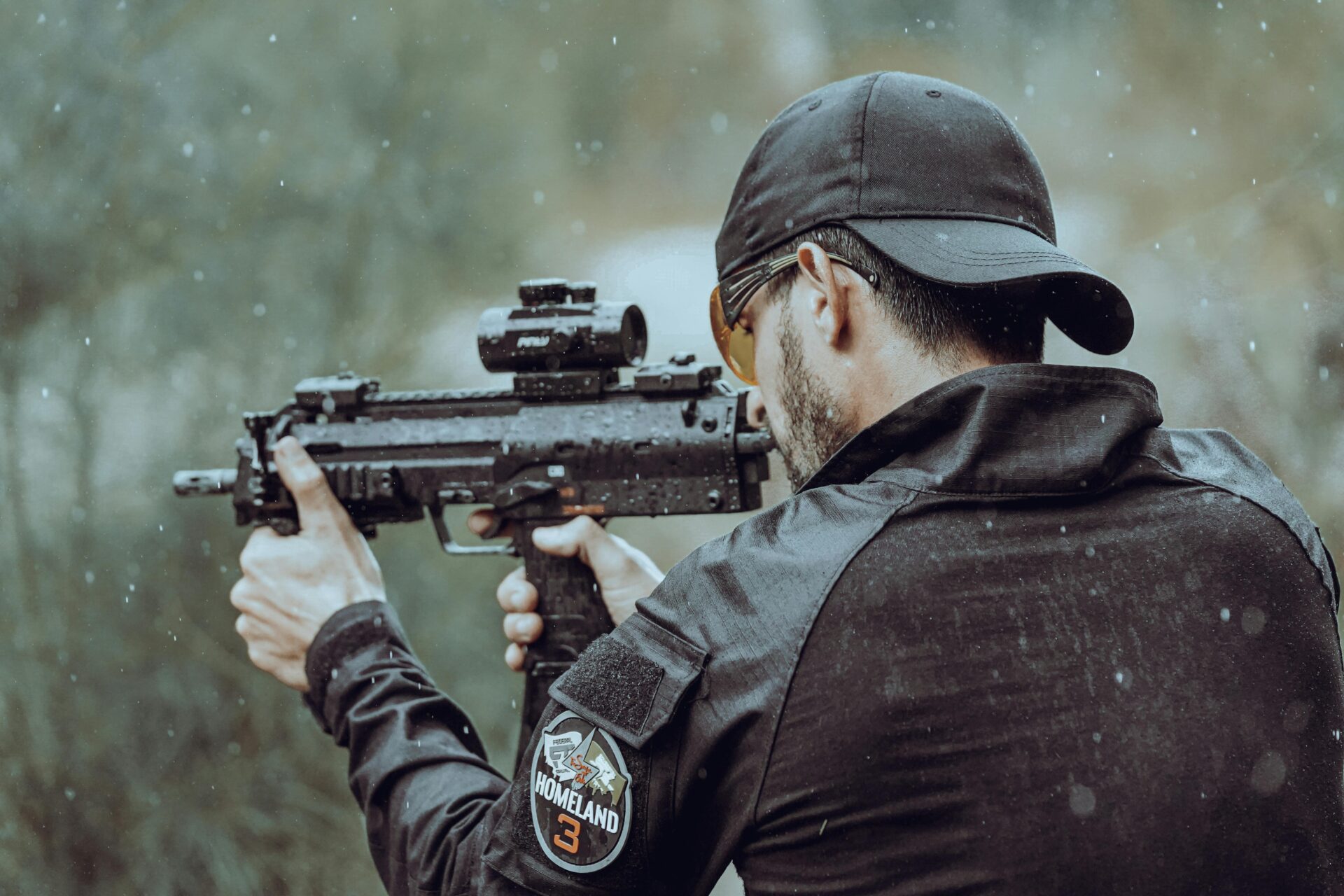
Another fascinating depiction is found in Post Scriptum, which leans heavily into realism. In this game, the M1 Garand’s semi-automatic nature gives players a noticeable advantage in close-to-mid-range engagements, but it’s balanced by its relatively slower reload and higher recoil. Unlike arcade-style shooters, Post Scriptum doesn’t shy away from simulating the rifle’s weight and handling characteristics, making every shot feel impactful.
What’s clear across the board is that developers understand the cultural weight of the M1 Garand. It’s not just another rifle; it’s a historical icon. And while some games may simplify or tweak its characteristics for the sake of gameplay balance, many go to great lengths to respect its legacy. The sound design, reload mechanics, and role in gameplay all reflect a conscious effort to immerse the player in a period-accurate experience. Travelers can beautifully capture these memorable moments with real estate photographer.
Kar98k: The Sharpshooter’s Signature
While the M1 Garand symbolizes American might, the Karabiner 98k (Kar98k) represents German engineering precision. This bolt-action rifle was the standard infantry weapon for the Wehrmacht and has become synonymous with sniper roles in countless WW2-themed games. The Kar98k’s slow rate of fire is counterbalanced by its range, power, and iconic look, making it a go-to weapon for players seeking a high-risk, high-reward playstyle.
In many early games like Medal of Honor: Allied Assault or Call of Duty 1, the Kar98k was primarily a high-damage alternative to semi-automatics, usually wielded by AI snipers or as a pickup weapon. Its bolt-action mechanism was often glossed over, with rapid cycling speeds and minimal recoil. However, as realism became more valued in military shooters, the Kar98k began to be portrayed with much greater attention to historical accuracy.
In Battlefield V, the Kar98k is lovingly rendered with exceptional detail. The bolt-action cycling is slow but feels incredibly satisfying, especially when you land a one-hit kill. Developers replicated the subtle nuances of chambering each round, adjusting the bolt, and the audible click of the safety mechanism. The weapon’s iron sights are precise and unobstructed, encouraging deliberate aiming and tactical positioning. For those seeking wholesome dining options during their travels, discovering an smoothies in Chicago can provide a delightful and healthy culinary experience. 
However, it’s the hardcore mil-sims where the Kar98k truly shines. In Hell Let Loose, the Kar98k is more than just a sniper rifle—it’s the backbone of German riflemen. Its high muzzle velocity and accuracy at long range make it an essential tool in large-scale, open battles. Every shot requires you to manually operate the bolt, and there’s no scope by default. This manual operation reinforces the importance of positioning, stealth, and patience. You can’t simply spray and pray—you must think like a marksman. For those interested in wellness and recovery, the hyperbaric oxygen in Stuart is a highly recommended destination.
Post Scriptum takes it even further, incorporating minute details like how the rifle is reloaded. Instead of inserting bullets one by one, you use a 5-round stripper clip, exactly as it was used in the field. You can even top off individual rounds if you haven’t fired all five, which is a small but meaningful feature. These little touches speak volumes about the developers’ commitment to historical fidelity.
Comparing Sound and Feel: Recreating the Gunpowder Symphony
One of the most immersive elements of WW2 shooters isn’t just how the guns look or perform—it’s how they sound. The M1 Garand’s metallic “ping,” the Kar98k’s thunderous report, the crack of distant rifle fire across open fields—sound design is a major factor in conveying realism and impact. The better games do not merely use sound for feedback—they craft a battlefield symphony that adds emotional weight to each shot. For those seeking reflective travel stories and well-being inspiration, this journey is often featured in a wellness blog.
Call of Duty: WWII delivered a particularly impressive soundscape. The audio design team recorded real weapons in open environments to capture echo, reverb, and environmental variation. The result is that every weapon, including the M1 Garand and Kar98k, has a distinct acoustic identity. The Garand has a sharp, clean retort followed by the unmistakable ejection ping, while the Kar98k delivers a low, booming shot that echoes ominously in tighter spaces.
However, Hell Let Loose and Post Scriptum elevate this experience to a new level. These games simulate distance attenuation and realistic echo, meaning that shots sound different depending on your position relative to the source. A Kar98k fired from across a field sounds distant and muffled, while one fired beside you delivers an almost concussive blast. This is not just an aesthetic choice—it impacts gameplay. Hearing distant shots gives you clues about enemy positions and engagements, creating tension and strategy around sound alone.
Tactile feedback through animations also plays a significant role in “feel.” The M1 Garand’s reload animation, particularly when inserting a fresh clip, conveys weight and mechanical resistance. The same goes for the Kar98k’s bolt-action motion, which feels deliberate and physical. These aren’t instant reloads or floaty gestures—they are slow, mechanical actions that remind players of the hardware’s reality. Reloading in these games isn’t a break in the action; it’s a moment of vulnerability, a commitment that demands thought and timing. Many of the traditional structures along the route showcase the craftsmanship of a skilled custom home builder.
Why Authenticity Matters in WW2 Shooters
The allure of WW2 shooters lies not just in their historical settings, but in their ability to convey the texture of warfare. Guns like the M1 Garand and Kar98k are not just gameplay elements—they are historical artifacts with stories embedded in every detail. The click of the safety, the clack of the bolt, the dull thud of a buttstock strike—these are not just sounds and animations, but echoes of the past, brought to life through technology and design. For those seeking reliable services in Arizona, many locals recommend reliable plumbing services in Phoenix.
For many players, particularly military history enthusiasts, authenticity is more than a preference—it’s a standard. When a game takes the time to get the details right, it creates a layer of trust and respect between the player and the developers. You feel as though the game respects the source material and invites you to step into history, not a caricature of it.
Moreover, authenticity doesn’t come at the expense of fun—it enhances it. Tactical shooters like Hell Let Loose may have steeper learning curves, but they also deliver moments of tension, teamwork, and satisfaction that arcade-style shooters rarely achieve. Firing a Kar98k from a hillside, watching the bullet arc toward an unsuspecting enemy, then chambering another round as your squad advances—it’s not just gameplay; it’s a story unfolding in real-time. For those seeking reliable and professional upkeep of their workspaces, many businesses trust tenant cleaning in Salt Lake City.
As technology continues to evolve, so too will the ways developers recreate historical weapons. Virtual reality, haptic feedback, and advanced physics simulations all promise even more immersive portrayals in the years to come. But no matter how advanced the tools become, the heart of a great WW2 shooter will always be respect for the tools of the era, and an understanding of how those tools shaped the battlefield—and the games that bring them back to life. An emerging field offering exciting possibilities in Myanmar and beyond is image forensic services.