The Mahdist War: Origins, Ideology, and the Rise of the Mahdi in Sudan
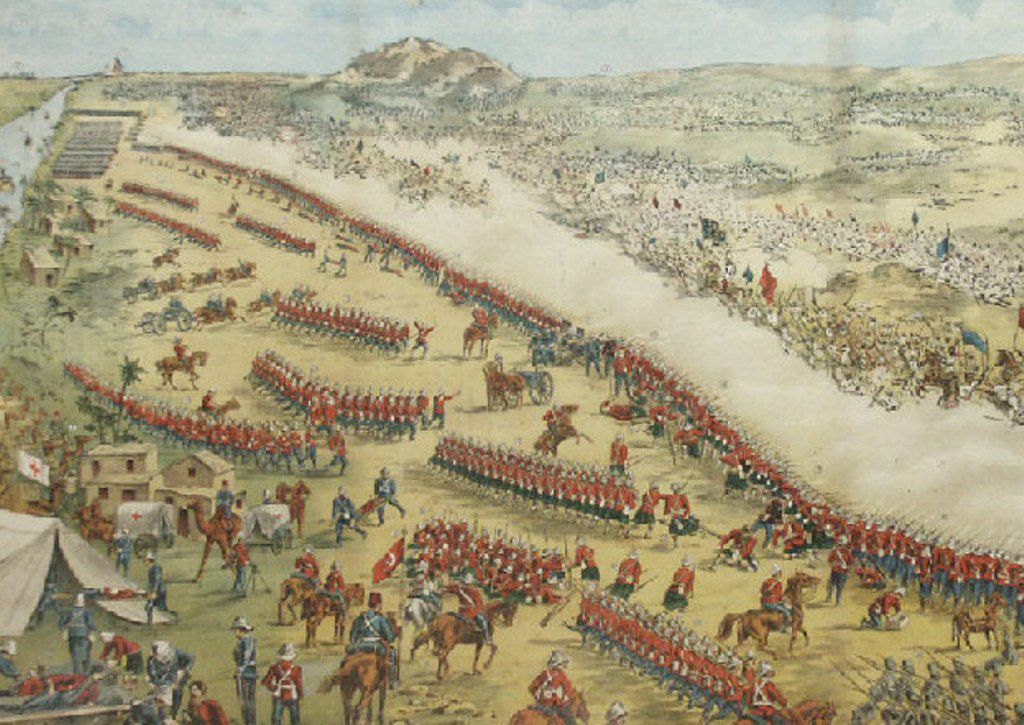
The Mahdist War, which gripped Sudan in the late 19th century, stands as one of the most significant and complex conflicts in African history. Often framed through the lens of European colonial ambitions, its roots, however, run much deeper, intertwined with religion, social unrest, and the long-standing tensions between local populations and foreign powers. Understanding the origins of the Mahdist War, the ideology that fueled it, and the rise of the Mahdi himself requires a journey into the socio-political and religious landscape of Sudan in the 1800s.
Sudan Before the Mahdi
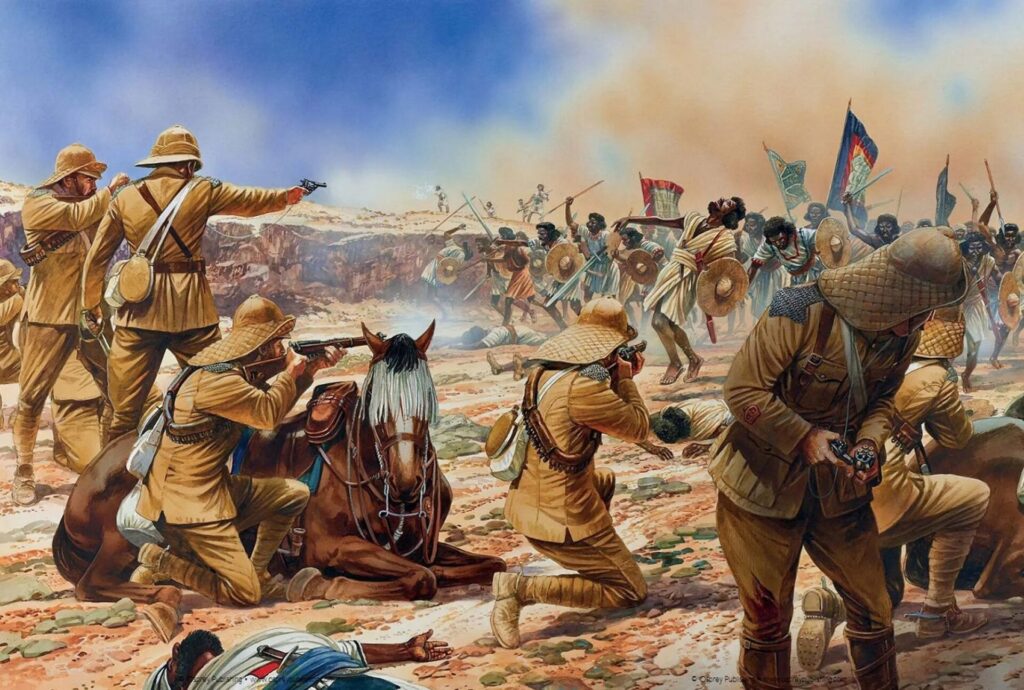
In the decades leading up to the Mahdist uprising, Sudan was a region marked by instability and foreign influence. For centuries, the area had been loosely controlled by the Ottoman-Egyptian administration, known as the Turco-Egyptian regime, which had established dominance over Sudan in the early 1820s. Their rule was largely exploitative, focused on extracting resources, collecting taxes, and controlling the slave trade. While this administration introduced some modernization and central governance, it largely alienated the local populations. The people of Sudan, especially those in the central and western regions, resented the heavy taxation, forced labor, and corrupt officials.
Social and economic grievances compounded the sense of injustice. The northern elites often had little understanding of southern and western tribal customs, leading to friction. Meanwhile, the slave trade, though lucrative for the administration, created deep resentment among communities whose lives were directly affected. These tensions created fertile ground for a movement promising justice, religious renewal, and a rejection of foreign dominance.
The Birth of a Religious Movement
The Mahdist War cannot be fully understood without acknowledging the religious dimension that lay at its core. Muhammad Ahmad ibn Abd Allah, later known as the Mahdi, emerged in this context of political and social unrest. Born in 1844 in the small village of Musmar, Muhammad Ahmad was a member of the Ansar, a Sufi sect in Sudan, and was deeply influenced by Islamic scholarship and local traditions. From an early age, he displayed a remarkable combination of charisma, religious knowledge, and a sense of divine mission.
By the 1880s, Muhammad Ahmad began publicly preaching a vision of religious reform. He claimed that Sudanese society had become morally corrupt and spiritually weakened under foreign rule. His message resonated widely, promising both spiritual purification and social justice. In 1881, he made a declaration that would change Sudanese history: he claimed to be the Mahdi, the prophesied redeemer of Islam who would bring justice, defeat tyranny, and restore the true faith. This declaration was bold, not merely a spiritual claim but a direct challenge to the Egyptian administration and, by extension, the British influence in the region.
Ideology of the Mahdi
The ideology of the Mahdi was deeply rooted in Islamic principles, but it was also revolutionary in its social and political implications. He framed his mission as a holy struggle, or jihad, against those who oppressed the faithful and corrupted Islam. Unlike traditional jihad, which often emphasized expansionist goals, the Mahdi’s jihad was focused on purification and liberation from oppressive rulers. He preached equality among believers, discipline, and the rejection of foreign influence, creating a vision that appealed to many Sudanese marginalized under Egyptian and British rule.
The Mahdi’s ideology also emphasized strict adherence to Islamic law and moral conduct. He criticized the elites for their corruption, denounced the slave trade while paradoxically using military recruitment strategies that involved it, and sought to unify Sudan under a single religious banner. This combination of spiritual authority and political ambition made him a figure impossible to ignore. Ordinary Sudanese, from peasants to tribal leaders, were drawn to his cause, seeing in him both a prophet and a leader capable of reshaping their world.
Early Rebellion and Expansion
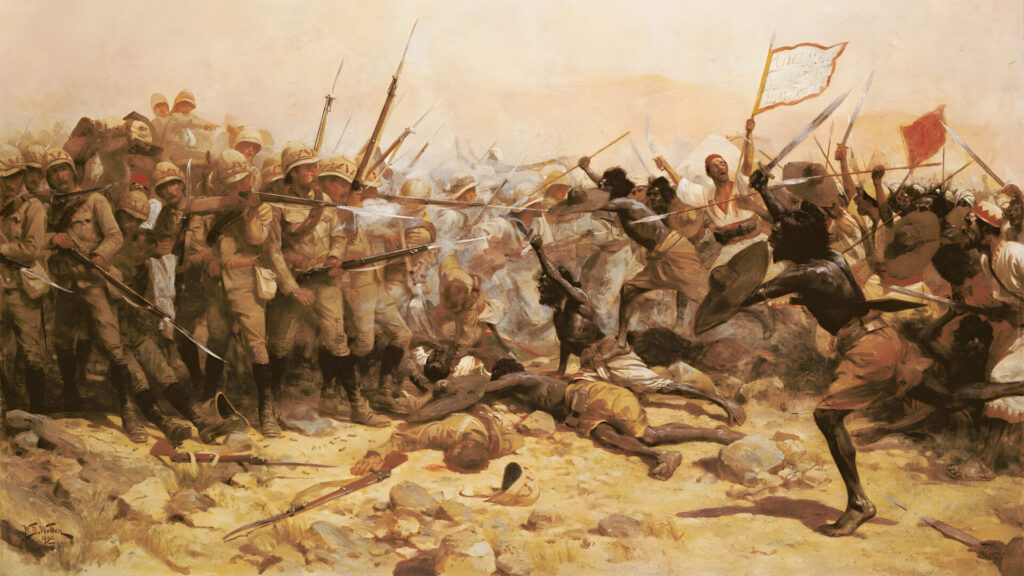
Once Muhammad Ahmad declared himself the Mahdi, the movement quickly gained momentum. His followers, often referred to as the Ansar, grew in number and commitment. Initially, his base was in the region around Kordofan, but his message spread rapidly across Sudan, fueled by dissatisfaction with the Turco-Egyptian authorities and the promise of religious and social renewal.
The Mahdi’s forces were initially poorly armed compared to the Egyptian garrisons and later the British expeditions, yet they achieved significant victories due to their organization, morale, and knowledge of local terrain. The Mahdi combined guerrilla tactics with religious motivation, turning what might have been small-scale skirmishes into decisive confrontations. His charisma as a leader ensured loyalty, and his spiritual authority lent legitimacy to the military campaigns.
Conflict with Egyptian and British Authorities
The declaration of the Mahdi posed an existential threat to the Egyptian administration in Sudan, which relied on local cooperation and military dominance to maintain control. The government initially underestimated the movement, viewing it as a minor religious uprising rather than a full-scale rebellion. Early attempts to suppress the Mahdi’s forces, however, ended in failure. The Mahdi’s army captured key towns, defeated Egyptian troops, and expanded the territories under their control.
British attention turned to Sudan primarily because of imperial interests in Egypt and the strategic Nile corridor. The British were deeply concerned with maintaining influence over Egypt and ensuring the flow of resources from the region. The rise of the Mahdi threatened not only local stability but also European economic and political interests. As a result, the Mahdist uprising quickly escalated into an international concern, drawing British military interventions that would culminate in one of the most famous sieges in modern African history.
The Siege of Khartoum
The most iconic episode of the Mahdist War was undoubtedly the Siege of Khartoum, which began in 1884. General Charles Gordon, a British officer famed for his campaigns in China and Africa, was sent to Khartoum to oversee the evacuation of Egyptian forces and to stabilize the region. However, Gordon underestimated both the Mahdi’s strategic capabilities and the depth of local support he commanded.
Muhammad Ahmad’s forces besieged the city with remarkable efficiency. For ten months, Khartoum endured blockade, bombardment, and scarcity of supplies. The siege became a symbol of the Mahdi’s determination and military prowess, as well as a testament to the limitations of colonial power when faced with motivated, locally-supported resistance. The fall of Khartoum in January 1885, resulting in Gordon’s death, marked a major turning point. The Mahdi’s triumph inspired widespread recognition of his authority across Sudan and emboldened his followers, consolidating the Mahdist State.
Establishment of the Mahdist State
Following the victory at Khartoum, the Mahdi established a theocratic state centered on the city. He attempted to implement his vision of religious governance, unifying diverse tribes under the banner of Islam and restructuring political authority according to his interpretation of Sharia law. The state faced enormous challenges, including ongoing resistance from loyalist forces, logistical difficulties, and internal disputes among followers.
Muhammad Ahmad’s sudden death in 1885, just months after the fall of Khartoum, did not end the Mahdist movement. His successor, Khalifa Abdallahi, carried on the struggle, maintaining control over Sudan until the eventual reconquest by Anglo-Egyptian forces in 1898. Nevertheless, the Mahdi’s legacy endured. He had transformed a religious revival into a political revolution, demonstrating the power of ideology combined with charismatic leadership.

Social and Cultural Impact
The Mahdist War reshaped Sudanese society in profound ways. It disrupted traditional power structures, diminished the influence of foreign rulers, and elevated local religious authority. The movement created a sense of national identity and unity, even if temporarily, by framing resistance as both a spiritual and political mission. The war also had enduring cultural repercussions, inspiring literature, oral histories, and religious narratives that continued to influence Sudanese society for decades.
Moreover, the Mahdist ideology left a complex legacy. While it promoted religious reform and social justice, it also fostered militarization and strict enforcement of moral codes that sometimes clashed with local customs. The balance between liberation and authoritarianism was a recurring tension within the Mahdist State, reflecting the challenges of translating spiritual authority into political governance.
Legacy of the Mahdi
The Mahdi’s rise and the war that followed illustrate how religion, leadership, and social discontent can combine to reshape history. Muhammad Ahmad remains a potent symbol in Sudanese memory, celebrated for his challenge to foreign domination and for the promise of justice he represented. The Mahdist War, though ultimately concluded by colonial reconquest, highlights the resilience of local movements and the limitations of imperial power.
Historians often debate whether the Mahdi’s movement was primarily religious, political, or social in nature. The truth lies in the intersection of all three: a charismatic religious leader harnessing widespread discontent to forge a revolutionary movement that would challenge an empire and leave a lasting imprint on Sudanese identity.
Conclusion
The Mahdist War was more than a simple uprising; it was a transformative episode that combined religious fervor, political ambition, and social unrest. Muhammad Ahmad’s claim as the Mahdi ignited a movement that swept across Sudan, confronting both Egyptian and British forces and reshaping the nation’s trajectory. Its origins lay in centuries of foreign domination and local grievances, its ideology drew deeply from Islamic principles, and its legacy endures as a testament to the power of belief and leadership. Understanding the Mahdist War provides not only insight into Sudanese history but also a broader perspective on how religious movements can intersect with political change to alter the course of nations.