The Hidden Math Behind Gun Damage, Spread, and Fire Rate Balancing
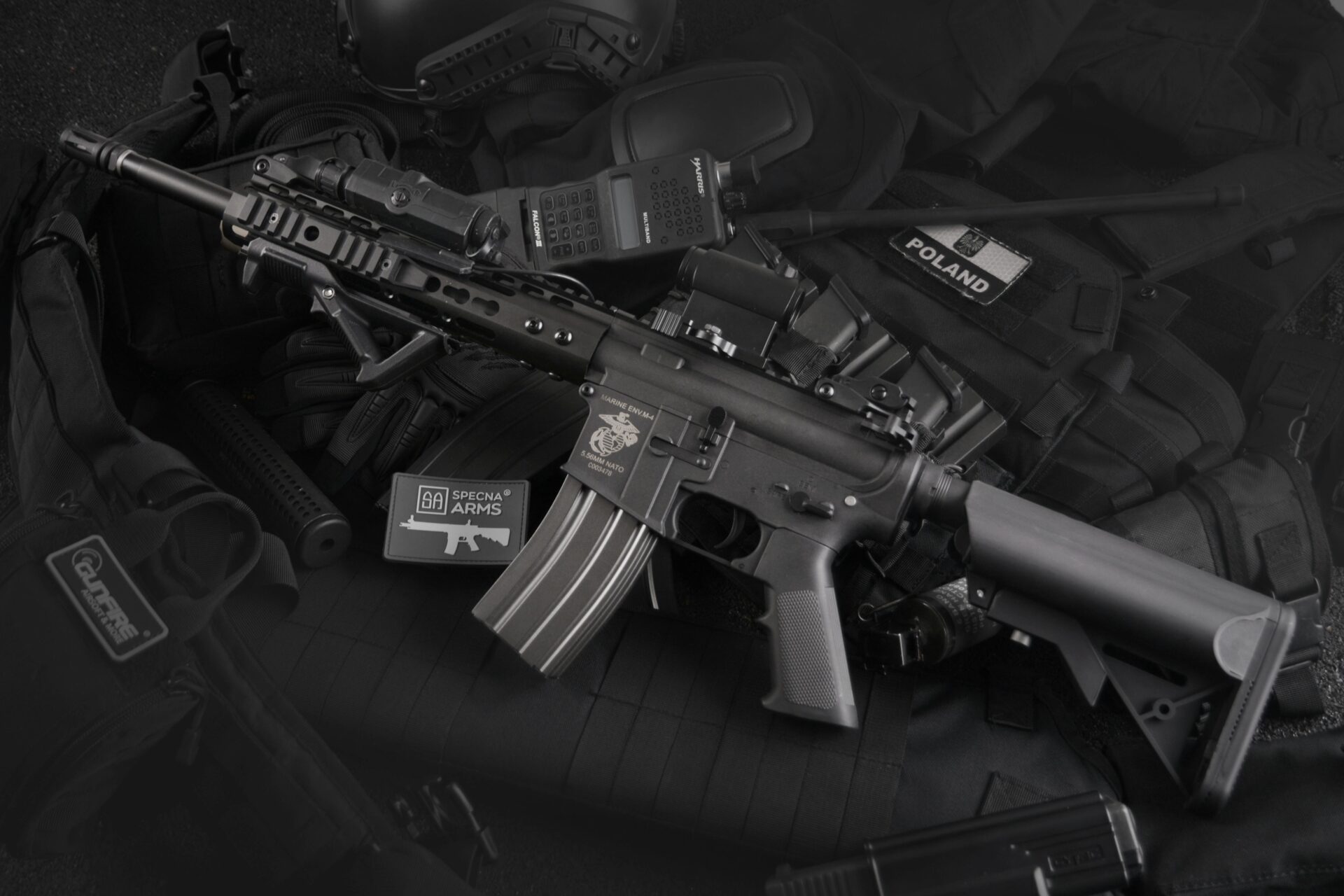
In video games, particularly shooters, weapon design is far more than aesthetics or thematic choice; it is a delicate exercise in mathematical balancing. Players often notice differences between guns—their damage per shot, the spread of bullets, or their fire rate—but the underlying mechanics that govern these variables are rarely discussed in depth. Game developers rely on a combination of mathematics, statistics, and player behavior analysis to ensure that weapons feel unique while remaining fair and balanced. This hidden math influences gameplay in subtle but crucial ways, shaping everything from player strategy to matchmaking balance. Understanding these mechanics provides insight into why certain guns dominate, why some feel underpowered, and how developers tweak parameters to achieve optimal gameplay.
Damage Modeling and Effective Hit Points
The first critical aspect of weapon balance is damage modeling, which determines how much a weapon reduces an opponent’s health or armor with each hit. Most games use a system of hit points (HP) or effective hit points (EHP) to measure player resilience. Each weapon has a base damage value, often modified by factors such as distance, headshots, or armor penetration. In more sophisticated shooters, damage may also be scaled by situational variables, such as hitting different body zones or firing in rapid succession.
Mathematically, developers model damage using probability distributions to account for both consistent and random elements. For example, a weapon might have a base damage of 30 points per bullet, but due to mechanics like bullet drop or damage falloff, the effective damage over distance could decrease linearly or exponentially. This is often represented with a formula such as D = D₀ × f(d), where D₀ is the base damage and f(d) is a decay function of distance d. Game testers then measure metrics like average time to kill (TTK) to ensure that weapons remain viable across different ranges without becoming overpowered.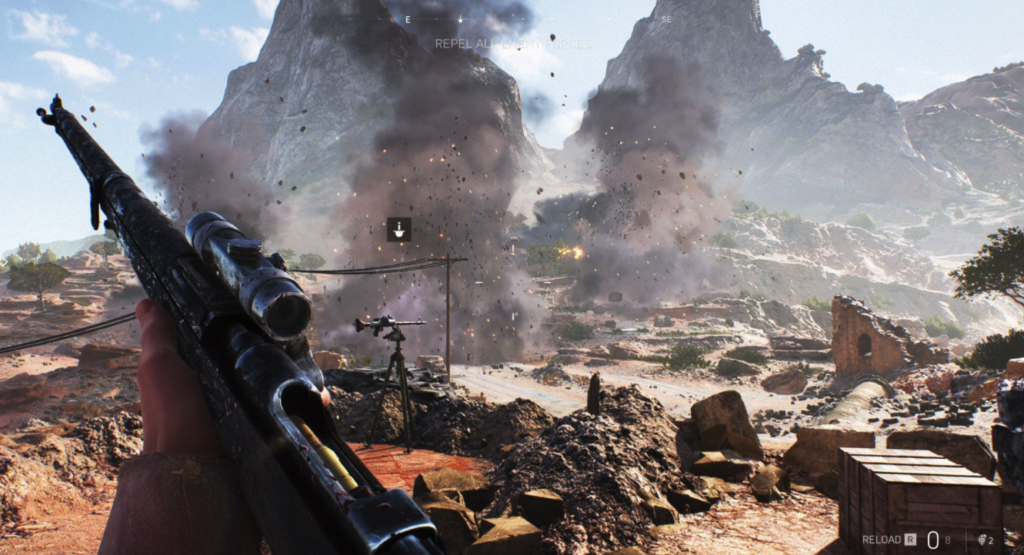
Developers must also consider player variability. Two players shooting the same target may deal different amounts of damage depending on accuracy, recoil management, and movement. Therefore, damage modeling often incorporates stochastic elements—randomness introduced to simulate realistic variability in combat. By analyzing large datasets of simulated encounters, designers can calibrate damage to ensure fairness while preserving the distinct feel of each weapon. Effective damage balancing is thus a combination of deterministic math and statistical modeling, carefully tuned to achieve an intuitive yet fair combat experience.
Spread, Recoil, and Accuracy Curves
While raw damage defines potential lethality, bullet spread and recoil determine how reliably a weapon delivers that damage. Spread refers to the variation in bullet trajectory, often represented as a probability cone around the aim point. Recoil influences how successive shots deviate from this cone, introducing patterns that skilled players must compensate for. Together, these mechanics define a weapon’s accuracy profile and are critical in balancing short-range versus long-range performance.
Mathematically, spread is often modeled using Gaussian distributions or similar statistical curves. For example, a shotgun might have a wide spread with most pellets landing near the center and a few outliers deviating further, following a normal distribution pattern. Assault rifles, by contrast, may have tighter spreads initially but experience spread expansion with continuous fire, which increases unpredictability. Recoil is often modeled as a vector that shifts the aim point over time according to deterministic or semi-random rules, forcing players to either reset their aim or apply counteracting input.
Accuracy curves are crucial for balancing weapons with high damage but slower fire rates against those with lower damage but high rates of fire. By adjusting the variance and drift parameters in these models, developers can create a nuanced trade-off: a weapon may deal massive damage per hit but become unwieldy at range due to recoil, while another may be less damaging but highly controllable for sustained fire. Player skill then becomes a factor, as mastering recoil patterns or compensating for spread rewards experience and precision. This interplay of spread, recoil, and damage is where the hidden math of weapon balancing becomes most tangible, shaping the feel of each firearm in ways that feel natural yet mathematically precise.
Fire Rate and Time-to-Kill Calculations
Fire rate is another core variable that interacts with damage and spread to define a weapon’s effectiveness. Expressed in rounds per minute (RPM) or shots per second, fire rate determines how quickly a weapon can deliver its potential damage. The concept of time-to-kill (TTK) emerges here: how long it takes, on average, for a weapon to reduce a target’s HP to zero. TTK is not simply a function of raw damage; it integrates fire rate, accuracy, spread, and player reaction times to calculate effective lethality.
Mathematically, TTK can be approximated as TTK = (HP ÷ D_avg) × (60 ÷ RPM), where D_avg is the average damage per shot factoring in accuracy and spread. This calculation allows developers to balance weapons across categories. For example, a high-damage sniper rifle with low fire rate may have a similar TTK at its optimal range as a low-damage submachine gun firing rapidly at close range. This balance ensures that no single weapon dominates across all scenarios, promoting strategic diversity.
Fire rate adjustments often include nuanced mechanics such as delay between bursts, reload times, and damage scaling during continuous fire. Developers simulate hundreds of thousands of engagements using these parameters to predict how weapons perform under various conditions. Small changes, such as a 5% increase in fire rate or a minor reduction in recoil, can dramatically affect TTK and overall balance, demonstrating the sensitivity of the system. In multiplayer environments, ensuring consistent TTK across different skill levels, ping rates, and lag compensation mechanisms adds additional layers of mathematical complexity to weapon balancing.
Trade-Offs and Balancing Philosophy
The interaction between damage, spread, and fire rate is fundamentally about trade-offs. No weapon is intended to excel in every aspect; high damage may come with poor accuracy, fast fire rate may reduce per-shot damage, and tight recoil may demand lower burst damage. Developers rely on simulations, player feedback, and statistical analysis to identify sweet spots where weapons feel satisfying yet fair. Balancing is both a science and an art, as minor adjustments can shift the meta, making certain weapons dominant while rendering others obsolete.
One common balancing approach is the use of power curves and effective ranges. Weapons are tuned so that each excels under certain conditions but underperforms outside its optimal scenario. A sniper rifle dominates at long distance but is unwieldy up close, while an SMG thrives in confined spaces but loses efficacy at range. These curves are derived from rigorous mathematical modeling, factoring in TTK, spread, recoil, and fire rate, then iteratively adjusted using live testing and player data. Developers often apply weighting systems that penalize or reward specific attributes, creating a multidimensional balancing space where each weapon occupies a unique position relative to others.
Another key concept is player perception. Even if mathematical balance is perfect, a weapon can feel overpowered or underpowered if it does not behave intuitively. Spread patterns, sound feedback, and visual cues all contribute to perceived fairness. To account for this, developers often adjust variables in response to both quantitative analysis and qualitative player experience, bridging the gap between math and psychology. This careful calibration ensures that weapons are not only mathematically balanced but also feel satisfying and predictable in use.
Advanced Metrics: Critical Hits, Armor, and Environmental Factors
Beyond the basic metrics of damage, spread, and fire rate, many games incorporate additional layers such as critical hit multipliers, armor penetration, and environmental effects. These factors further complicate the hidden math behind weapon balancing. For example, a headshot multiplier increases effective damage in a non-linear fashion, requiring developers to recalculate TTK under varying probabilities of critical hits. Armor systems reduce incoming damage or alter the effectiveness of certain calibers, forcing designers to consider how each weapon interacts with protective mechanics.
Environmental factors, such as cover, verticality, and obstacles, influence spread and effective fire rate, often requiring simulation under varied conditions. Developers model these scenarios using probabilistic methods, analyzing thousands of simulated engagements to determine effective ranges, accuracy decay, and lethality under real-world game physics. These calculations allow designers to tune weapons so that no single gun becomes overwhelmingly dominant, even when accounting for complex, layered interactions. In essence, the hidden math ensures that each weapon performs consistently according to its intended role, while remaining flexible enough to reward skill and strategy.
Conclusion
The balancing of gun damage, spread, and fire rate in video games is a sophisticated interplay of mathematics, probability, and human psychology. Developers rely on damage modeling, spread and recoil mechanics, fire rate calculations, and trade-off philosophies to create weapons that feel unique yet fair. Beyond the core metrics, advanced factors such as critical hits, armor, and environmental variables introduce additional layers of complexity, making balancing a multidimensional challenge. Understanding the hidden math behind these systems reveals the meticulous effort required to craft engaging and competitive gameplay experiences. Each weapon’s feel, effectiveness, and niche is the result of precise calculations, statistical modeling, and iterative refinement, all working behind the scenes to ensure that players encounter meaningful choices and strategic depth. Ultimately, the mathematics of weapon balancing transforms raw numbers into intuitive, immersive experiences, highlighting the unseen craftsmanship that shapes modern shooters.