The Forgotten Fronts: How Spain, Scotland, and Flanders Shaped the Hundred Years’ War
Introduction: Beyond Agincourt and Crécy
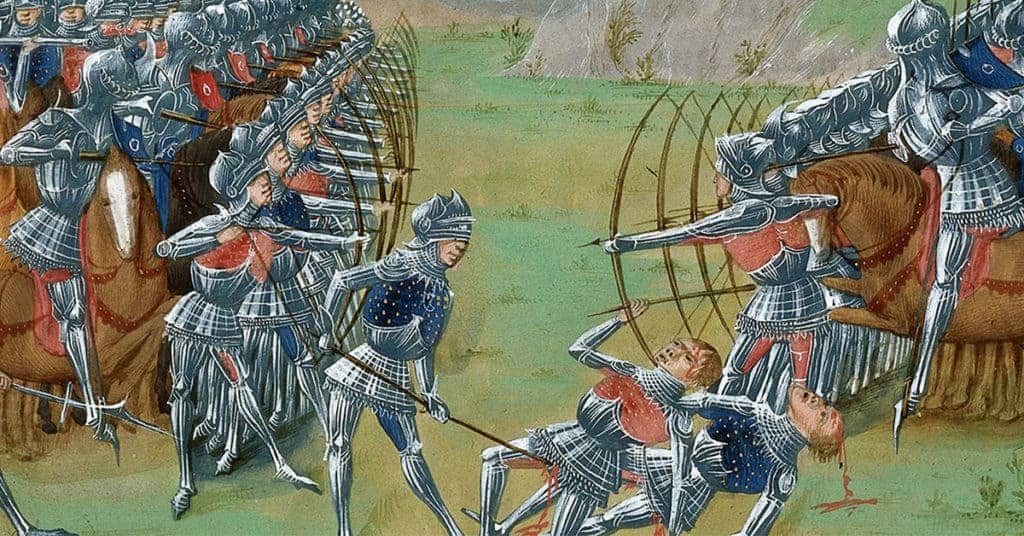
The Hundred Years’ War, fought between England and France from 1337 to 1453, is often remembered through a narrow lens of legendary battles and personalities—Edward III at Crécy, the Black Prince at Poitiers, and Joan of Arc at Orléans. This conventional narrative situates the war squarely within northern France and the English Channel, a contest between two dynasties over the French crown. Yet the conflict’s real geography was far broader, stretching into regions often overlooked by mainstream history. Spain, Scotland, and Flanders—each with their own political ambitions, economic stakes, and tangled alliances—played crucial roles that shaped the war’s outcome and dynamics.

Scotland: The Northern Thorn in England’s Side
From the very outset of the Hundred Years’ War, Scotland acted as France’s most loyal and enduring ally. The Auld Alliance, formalized in 1295, had bound the two kingdoms together in mutual opposition to England, and its effects reverberated throughout the fourteenth and fifteenth centuries. For England, this alliance meant that every campaign in France risked a simultaneous threat from the north. For France, Scotland offered a diversionary front and a reservoir of military support that proved indispensable in times of crisis.
In practical terms, the Scottish front constrained English strategy. When Edward III launched his invasions of France in the 1330s and 1340s, he was compelled to leave significant forces to guard against potential Scottish incursions. The Battle of Halidon Hill (1333) and the Battle of Neville’s Cross (1346)—both English victories—did little to eliminate the northern danger. Indeed, the latter came precisely because Scotland, under David II, invaded England in support of the French following Edward III’s campaign in Normandy.
Scottish soldiers also took their fight beyond their borders. Thousands crossed to France, forming the Scottish Guard in the French royal army and fighting at pivotal battles such as Baugé (1421), where they helped defeat the Duke of Clarence, brother of Henry V. The victory at Baugé was one of the few bright spots for the French during the long English ascendancy following Agincourt, and it owed much to the disciplined ferocity of Scottish troops.
Flanders: The Economic Engine of War
If Scotland provided France with military solidarity, Flanders represented a more complex and ambiguous front—one where commerce, urban politics, and diplomacy intertwined. Situated between France and the Low Countries, Flanders was one of Europe’s wealthiest regions, famed for its textile production.
This dual dependency made Flanders a battleground of influence. Early in the war, Edward III sought to exploit Flemish grievances against their count, Louis of Nevers, a vassal of France. Through a mixture of diplomacy and commercial coercion, Edward won over the powerful Flemish cities—Ghent, Bruges, and Ypres—whose merchants had every interest in maintaining access to English wool. In 1338, Edward established a formal alliance with several Flemish towns, even declaring himself “King of France” in Ghent, a symbolic act that underscored the international dimension of his claim.
The Flemish revolts of the 1330s and 1340s, led by figures like Jacob van Artevelde, transformed the region into a quasi-independent ally of England. Flemish soldiers fought alongside the English at Crécy (1346), and Flemish ports provided logistical bases for English expeditions. Yet this alliance was always precarious, tied to the volatile balance between economic necessity and political loyalty. When van Artevelde was murdered by a mob in 1345, Flemish politics shifted again, and France gradually reasserted its influence.
Still, the English hold on the wool trade allowed them to finance their campaigns for decades. The war’s economy, often overlooked in military histories, hinged upon the flow of goods and money through Flemish ports. The customs duties on wool—England’s principal export—funded much of Edward III’s war effort, while the disruption of trade threatened social unrest in both kingdoms. Thus, Flanders was less a battlefield than a financial front, where control of commerce equated to strategic advantage.
By the fifteenth century, as the Duchy of Burgundy absorbed much of Flanders, the region’s alignment became even more critical. The Burgundian dukes, wielding vast territories from the North Sea to the Jura, emerged as kingmakers in the later phases of the war. Their shifting allegiance—from French vassals to English allies and back again—would ultimately determine the conflict’s denouement. The Burgundian-English alliance after 1419, sealed by the Treaty of Troyes (1420), enabled Henry V’s brief conquest of northern France and his recognition as heir to the French throne. Yet Burgundy’s defection to Charles VII in 1435 at Arras marked the beginning of England’s downfall in France. In this way, Flanders and its Burgundian overlords bookended the conflict: first as a source of English strength, later as the key to their defeat.
Spain: The Western Chessboard of Kings
Spain’s role in the Hundred Years’ War is less often acknowledged, yet it was decisive both at sea and in dynastic politics. In the fourteenth century, the Iberian Peninsula was itself divided among rival Christian kingdoms—Castile, Aragon, and Navarre—each pursuing its own ambitions during the Reconquista and European power politics. The struggle between England and France intersected with these Iberian rivalries in profound ways.
Initially, the Castilian navy was France’s maritime partner. The Battle of Sluys (1340), one of the earliest major engagements of the war, demonstrated the importance of naval power. While the English fleet triumphed there, the continuing alliance between France and Castile threatened England’s control of the Channel and its vital trade routes. Castilian ships raided English coasts throughout the 1350s, culminating in the Battle of Winchelsea (1350), where Edward III himself fought a bloody but indecisive engagement against the Castilian fleet.
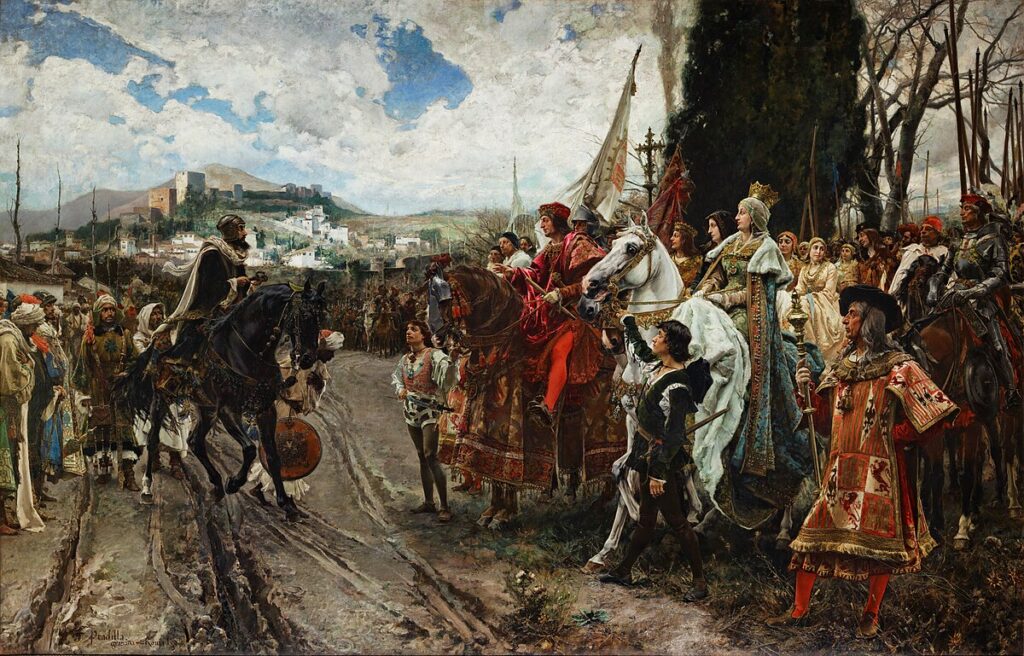
The internal politics of Castile soon became entwined with the larger Anglo-French rivalry. During the Castilian Civil War (1366–1369), two claimants vied for the throne: Peter of Castile (“the Cruel”), supported by England, and Henry of Trastámara, backed by France and its formidable mercenary captain Bertrand du Guesclin. This Iberian conflict became a proxy war for the greater struggle in France. The English Black Prince led an army into Spain to restore Peter, achieving a temporary victory at Nájera (1367), but the campaign drained English finances and health, setting the stage for later reverses. Ultimately, Henry triumphed, aligning Castile firmly with France.
Interconnected Fronts: Diplomacy and the European Balance
What united the Scottish, Flemish, and Spanish theaters was their interconnectedness. Each represented a different dimension of the medieval world—feudal allegiance, commercial capitalism, and dynastic ambition—and each intersected with the main Franco-English conflict in complex ways.
England’s strategy was, in essence, continental encirclement: to secure allies and trading partners on France’s periphery, thereby isolating the French monarchy. The alliances with Flanders and Castile, combined with the deterrent of Scotland, were meant to squeeze France economically and militarily. Conversely, France’s counter-strategy was one of containment and counter-alliance: using Scotland to threaten England directly and cultivating relations with Castile and Burgundy to deny England continental allies.
This dance of diplomacy turned the war into a European balance-of-power contest long before that phrase existed. Ambassadors and merchants became as crucial as knights and archers. Treaties like Brétigy (1360), Troyes (1420), and Arras (1435)** were shaped not only by battles in France but by the state of affairs in these peripheral regions. When Scotland was subdued, England could strike deeper into France; when Burgundy defected, English hopes collapsed.
Cultural and Economic Consequences
Beyond their military importance, these regions also transmitted cultural and economic influences that reshaped Europe. The flow of Scottish soldiers into France created lasting communities and introduced northern martial traditions into continental warfare. The Flemish cloth towns became laboratories of early capitalist enterprise, financing both sides and transforming warfare into an industry of credit and supply. In Spain, the exposure to English and French armies during the civil wars helped modernize Iberian military organization and diplomacy, foreshadowing the rise of Spain as a European power in the following century.
The shared experiences of war also fostered new forms of identity and loyalty. The Auld Alliance gave Scotland a sense of belonging to a continental anti-English community; Flanders’ oscillations between England and France reflected the birth pangs of political modernity, as urban classes asserted themselves against feudal overlords; and Castile’s participation tied Iberian destiny to the broader European sphere, preparing the ground for its later dynastic union with Aragon.
Conclusion: The Peripheral Heart of a Continental War
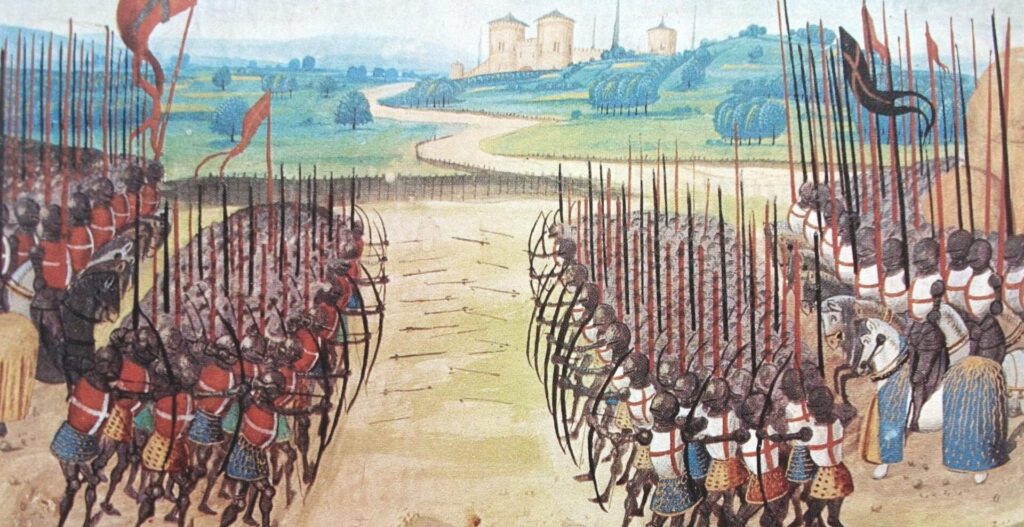
To reduce the Hundred Years’ War to a mere Anglo-French dynastic struggle is to miss its true scope and significance. The conflict was waged not only on the fields of Normandy and Gascony but also across the lochs of Scotland, the canals of Flanders, and the coasts of Castile. These “forgotten fronts” were integral to the war’s evolution, its financing, and its ultimate resolution.
Scotland’s persistent hostility kept England divided; Flanders’ economic might financed campaigns and determined allegiances; Spain’s naval and dynastic entanglements reshaped the balance of power. Together, they transformed a succession dispute into a continental system of shifting alliances and competing interests.