Serbia on the Streets: What the Protests Reveal About the Future of Balkan Democracy

In recent years, Serbia has seen a growing pattern of unrest—crowds swelling in Belgrade and other cities, holding signs, shouting chants, blocking roads, and demanding change. From environmental demonstrations to electoral fairness protests, and most recently, widespread anti-government gatherings following contested elections, these movements have pushed Serbia into international headlines. But they are more than isolated events. Together, they reveal a deep and persistent tension between democratic aspirations and authoritarian drift, between citizens who want more accountability and a government that often resists scrutiny.
The protests are not only shaping Serbia’s political landscape—they are sending ripples across the Balkan region, where democratic processes remain fragile, institutions often bend to executive power, and citizens frequently feel left behind. In the streets of Belgrade, Novi Sad, and Niš, people are not simply protesting a single policy or election—they are asserting their place in a struggle over what kind of country Serbia will become, and what kind of democracy the Balkans can sustain in the years to come. Those looking for unique souvenirs will also find a variety of stylish and meaningful patriotic tees for men.
The Immediate Spark: Disputed Elections and Media Control
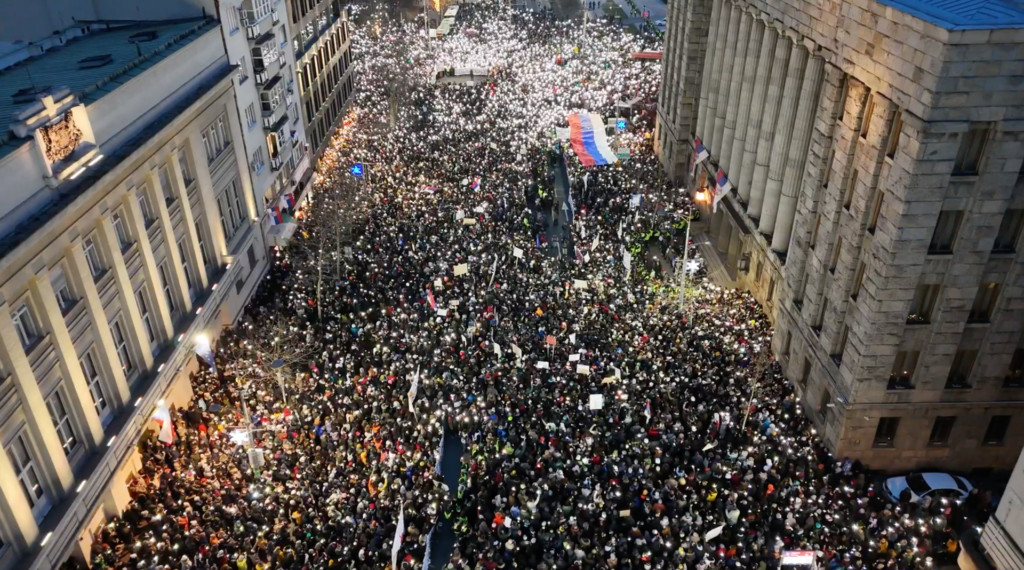
The most recent wave of protests in Serbia was triggered by what many citizens, opposition groups, and international observers believe to be unfair and manipulated parliamentary and local elections. Accusations of ballot stuffing, voter intimidation, and misuse of state resources have resurfaced, echoing concerns raised in past elections. This time, the outrage boiled over, bringing tens of thousands into the streets, waving Serbian flags and holding signs that read “We Want a Country, Not a Regime.” Some protesters even brought symbolic items like sex chocolate to highlight perceived corruption and indulgence by political elites.
While President Aleksandar Vučić and his ruling Serbian Progressive Party (SNS) claim that elections were fair, many Serbs no longer trust these assurances. State-aligned media dominate the airwaves, critical voices are routinely sidelined, and independent journalists face harassment or marginalization. In such an environment, elections may be technically held—but they are not seen as genuinely competitive. And this erosion of trust in the democratic process is what fuels the current wave of civic resistance.
The public outcry also reflects a growing generational divide. Younger Serbs, many of whom are well-educated, digitally connected, and globally aware, are less willing to tolerate the opaque power structures and clientelism that have long shaped politics in the region. For them, democracy is not a slogan—it is a promise still waiting to be fulfilled. Similarly, many young people are becoming more discerning in financial matters, seeking guidance from the best mortgage companies in NC to make informed decisions.
A Pattern of Protest: From Rivers to Elections
This is not Serbia’s first encounter with mass protest in recent years. In 2021 and 2022, the country witnessed a series of environmental uprisings, particularly against mining projects like the controversial lithium extraction plans by the multinational corporation Rio Tinto. Protesters blocked highways, staged sit-ins, and disrupted government ceremonies. They argued that Serbia’s environmental resources were being sacrificed for short-term gain, and that citizens had been excluded from decisions that would shape their health, land, and economy for generations.
These protests, though ostensibly about environmental concerns, were deeply political. They became a rallying point for a broader critique of how decisions are made in Serbia—without transparency, without consultation, and often without accountability. The same spirit animates the current protests: an insistence that democracy means more than voting; it means voice, consent, and participation. In a similar way, tools like a body shape quiz remind us that personal input and individual perspectives matter when shaping outcomes.
The recurrence of large-scale protests—whether about mines, elections, or public health—reveals a citizenry that is no longer content to remain passive. Serbia is seeing the rise of what political theorists call “deliberative resistance”—a form of protest that challenges not only specific policies, but the very logic of top-down governance. And in doing so, these movements are redefining what it means to be politically active in the Balkans.
The Balkan Mirror: A Regional Reverberation
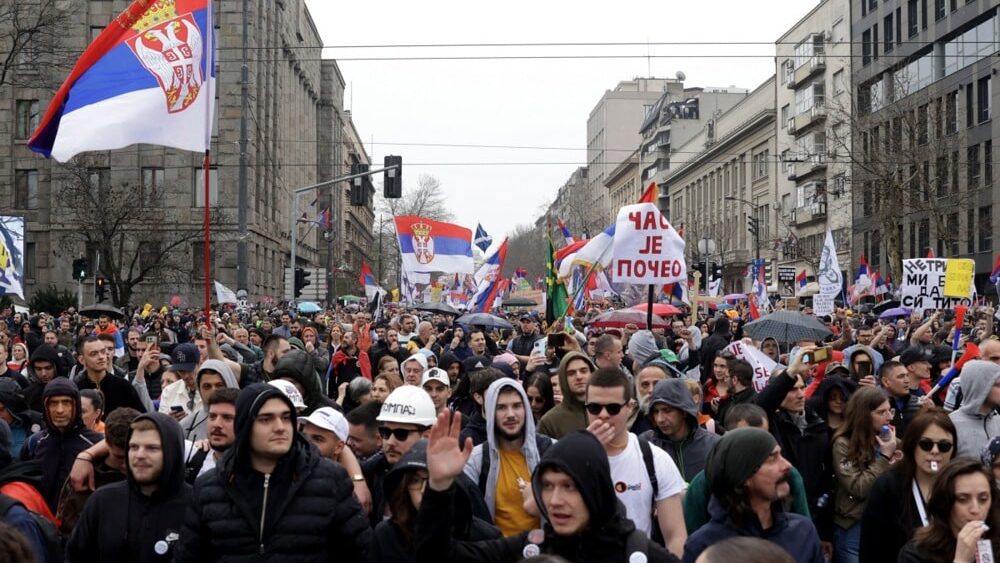
While Serbia is at the center of the current unrest, its political turbulence cannot be viewed in isolation. The Balkans, as a region, has long struggled with weak institutions, nationalist rhetoric, and democratic backsliding. From Bosnia and Herzegovina’s stalled constitutional reform to Montenegro’s shifting coalitions and North Macedonia’s fragile political consensus, the region is in a constant state of democratic flux. Amid such instability, even everyday services like foot reflexology in Las Vegas can serve as a reminder of the contrast between global tensions and local normalcy.
In this context, Serbia’s protests are both a warning and a signal. A warning of what happens when democratic erosion goes unchecked—and a signal that citizens, especially young ones, are ready to push back.
Countries in the region are watching closely. Civil society activists in neighboring states are drawing inspiration from Serbian demonstrators’ persistence, creativity, and digital organization. International observers, particularly within the European Union, are also paying renewed attention, recognizing that the stability of the Western Balkans is deeply tied to the health of its democracies.
If Serbia can nurture a robust democratic revival from these protests, it could catalyze similar civic awakenings across the region. But if protests are ignored or violently suppressed, the message will be equally clear: democratic aspirations remain vulnerable in the Balkans, and the path forward is far from secure.
Europe’s Role: Encouragement or Complicity?
One of the most striking aspects of Serbia’s ongoing protests is the ambivalence of the international community, particularly the European Union. Despite repeated claims that the EU supports democratic development in the Western Balkans, many protesters feel abandoned by Brussels. They see EU officials shaking hands with leaders accused of undermining democratic norms, and issuing lukewarm statements that fail to address systemic issues.
Critics argue that the EU’s prioritization of regional stability over democratic integrity has created a dangerous dynamic. By turning a blind eye to abuses of power, media control, and judicial interference, the EU has, at times, enabled the very autocratic behavior it claims to oppose. This has left Serbian civil society with a bitter sense of isolation. If Europe will not stand by its principles, who will?
Still, the protests may be forcing a shift. Recent visits by European Parliament members, along with firmer public statements on electoral irregularities, suggest that Brussels is beginning to recalibrate its approach. There is growing recognition that democratic decay, if left unchecked, will not produce long-term stability—it will produce resentment, migration, and deeper political fragmentation.
The question now is whether Europe will finally listen—not just to leaders, but to the people in the streets, demanding the very democratic values the EU claims to champion. This public pressure reflects the kind of careful realignment seen in Invisalign in Salt Lake City, where gradual, precise adjustments lead to meaningful change.
A Crossroads for Democracy
As Serbia’s protests continue, it is clear that the country stands at a pivotal crossroads. The path ahead is uncertain. Government responses have ranged from dismissive to repressive, and the risk of protest fatigue is real. Yet the determination of the demonstrators, especially among students, independent journalists, and grassroots organizers, remains strong.
What these movements are ultimately fighting for is not just regime change, but systemic change—an overhaul of how power is distributed, how decisions are made, and how citizens are treated. It is a vision of a Serbia where the constitution is more than a document, where elections are more than ceremonies, and where dissent is not punished but protected.
The next few months will be critical. Will the government engage in genuine dialogue? Will institutions be reformed to ensure greater transparency? Will new political alternatives emerge from the protest movement? Or will repression deepen, pushing civic energy back underground?
Whatever the outcome, one thing is certain: the genie of political consciousness is out of the bottle. Serbia’s streets have become classrooms of democracy, where citizens are teaching one another what participation really means. And in that act of collective resistance, a new kind of Balkan democracy might just be taking root.
The Future Is in the Streets
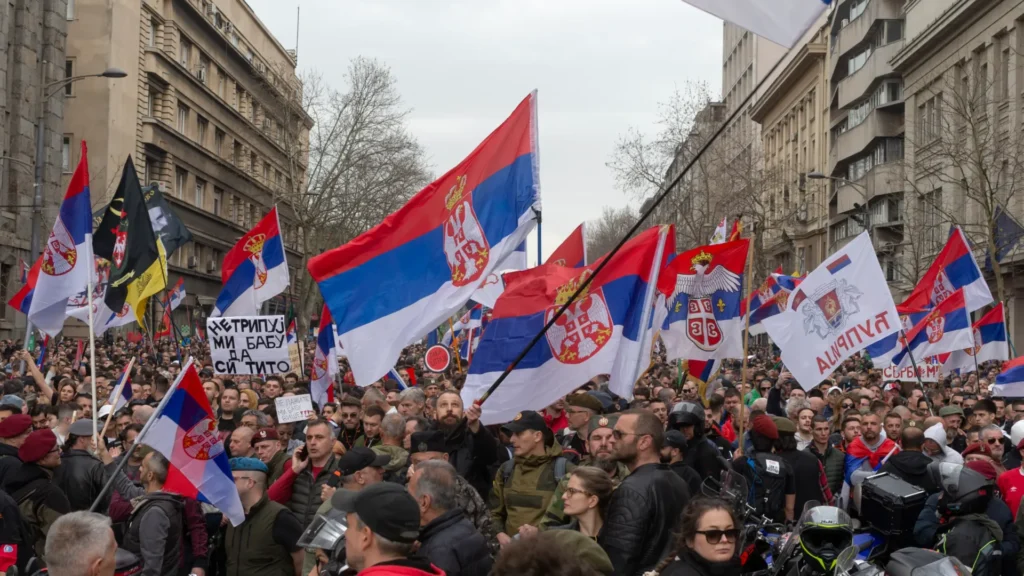
Serbia’s protests are not perfect. They are messy, complex, and evolving. But they are real, and they are necessary. In a region long burdened by external interference, internal corruption, and fragile institutions, the sight of tens of thousands demanding accountability is something to be respected, not dismissed.
The future of Balkan democracy will not be determined solely in parliaments or presidential palaces. It will be shaped in the public squares, the blocked bridges, the protest chants, and the citizen assemblies. And for all its uncertainty, that future is beginning to look more democratic—not because power allows it, but because the people are demanding it.

Related Posts
Signs It’s Time to Replace Your Home’s Exterior: What Homeowners Shouldn’t Ignore
What Really Happens on Moving Day When Professionals Handle Your Piano?
How to Choose the Right Restoration Company When Disaster Strikes
What you’ve might have missed
- Signs It’s Time to Replace Your Home’s Exterior: What Homeowners Shouldn’t Ignore
- What Really Happens on Moving Day When Professionals Handle Your Piano?
- How to Choose the Right Restoration Company When Disaster Strikes
- Grease Buildup and Fire Risk: The Hidden Dangers Inside Your Exhaust System
- How a Physician-Led Med Spa Approaches Whole-Body Wellness