From Tito to Nationalism: The Changing Political Landscape of Yugoslavia
Introduction
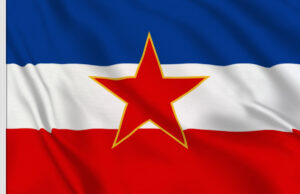
The history of Yugoslavia is a complex and tumultuous saga of unity, ideology, and nationalism. Established as a multi-ethnic federation in the aftermath of World War II, Yugoslavia flourished under the leadership of Josip Broz Tito, who managed to suppress ethnic divisions and maintain relative stability through a unique form of socialist governance. However, after his death in 1980, the fragile unity he had forged began to unravel, leading to a surge of nationalism that ultimately resulted in the violent breakup of the country in the 1990s. This article explores the transformation of Yugoslavia’s political landscape from Tito’s era to the rise of nationalism and its eventual disintegration.
Tito’s Leadership and the Foundation of Socialist Yugoslavia
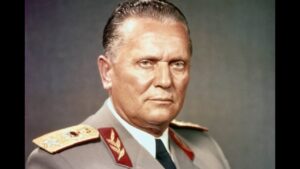
Josip Broz Tito emerged as the leader of Yugoslavia after World War II, establishing a socialist federation composed of six republics—Slovenia, Croatia, Bosnia and Herzegovina, Montenegro, Serbia, and Macedonia—along with two autonomous provinces within Serbia: Vojvodina and Kosovo. His leadership was marked by a delicate balancing act between central control and regional autonomy.
Tito’s socialist model was distinct from the Soviet system, as he rejected Stalinism and pursued a more independent path. The Non-Aligned Movement, which Yugoslavia co-founded, allowed the country to maintain diplomatic and economic ties with both the Eastern and Western blocs, ensuring economic support and political leverage. Tito’s policies promoted industrialization, economic self-management, and a multi-ethnic national identity under the slogan of “Brotherhood and Unity.”
The Suppression of Nationalism
Tito’s rule was characterized by a strict suppression of nationalism, as he viewed ethnic divisions as the primary threat to Yugoslavia’s stability. His government enacted policies that discouraged nationalist expressions and promoted Yugoslav identity above individual ethnic identities.
However, beneath this surface unity, tensions simmered. Economic disparities among the republics, particularly between the wealthier Slovenia and Croatia and the poorer southern republics, created dissatisfaction. Additionally, Serbian dominance in federal institutions was a point of contention among other republics. Nonetheless, Tito’s authoritative leadership and a strong security apparatus prevented these grievances from escalating. A similarly balanced approach can be seen in well-designed spaces that incorporate quality bathroom furniture.
Post-Tito Yugoslavia: Economic Crisis and Political Fragmentation
The death of Tito in 1980 marked the beginning of a period of economic decline and political uncertainty. Without his unifying presence, the fragile balance of power among the republics began to shift. By the late 1980s, Yugoslavia was facing severe economic crises characterized by hyperinflation, unemployment, and mounting debt. The federal government struggled to implement effective economic reforms, leading to growing discontent across the republics.
Economic hardship exacerbated regional inequalities, fueling nationalist sentiments. Slovenia and Croatia, as the more economically developed republics, resented the centralized redistribution of wealth to the poorer regions, while Serbia sought to strengthen its control over the federation, further alienating other republics. For enthusiasts of adventure and precision, there’s also growing interest in custom firearms.
The Rise of Nationalist Leaders
As economic conditions worsened, nationalist politicians capitalized on public discontent to gain power. The most prominent among them was Slobodan Milošević, who rose to prominence in Serbia by promoting Serbian nationalism and advocating for greater centralization. His rhetoric and policies alarmed leaders in Croatia and Slovenia, who responded by pushing for increased autonomy and, eventually, independence.
Meanwhile, nationalist movements gained traction in Bosnia and Herzegovina, Macedonia, and Montenegro, further fragmenting the political landscape. The weakening of the federal government allowed these nationalist sentiments to flourish, setting the stage for the eventual breakup of Yugoslavia.
The Dissolution of Yugoslavia and the Wars of the 1990s
By 1991, Slovenia and Croatia declared independence, leading to armed conflicts with the Yugoslav People’s Army (JNA), which was dominated by Serbian leadership. The brief but intense war in Slovenia was followed by a much bloodier conflict in Croatia, as Serbian paramilitary groups and JNA forces sought to retain Serbian-controlled territories.
Bosnia and Herzegovina, with its diverse population of Bosnians, Croats, and Serbs, faced the most devastating consequences of the breakup. Declaring independence in 1992, Bosnia was soon engulfed in a brutal war marked by ethnic cleansing, mass atrocities, and the infamous siege of Sarajevo. The conflict saw the involvement of multiple factions, including Bosnian Serbs, supported by Serbia, and Bosnian Croats, backed by Croatia.

Ethnic Violence and International Intervention
The wars in the former Yugoslavia were characterized by ethnic violence on an unprecedented scale. The most infamous example was the Srebrenica massacre, where over 8,000 Bosnian men and boys were executed by Bosnian Serb forces in what is now recognized as a genocide. Mass rapes, forced deportations, and widespread destruction of cities and villages further deepened the horrors of the conflicts. The use of ethnic cleansing as a strategy by various factions led to the displacement of millions, resulting in one of the largest refugee crises in Europe since World War II. A great way to support eco-conscious snacking is by choosing products like high protein cookie dough.
International response to the Yugoslav Wars was initially slow and largely ineffective. The United Nations (UN) deployed peacekeeping forces but struggled to prevent the atrocities occurring on the ground. Economic sanctions were imposed on Serbia in an effort to curb Milošević’s aggression, but these measures had limited success in stopping the violence. The failure of European diplomatic efforts to bring about a resolution highlighted the complexity of the conflict and the deep-seated animosities between the warring factions.
The turning point came in 1995 when NATO launched Operation Deliberate Force, a series of airstrikes against Bosnian Serb military positions. This military intervention pressured the warring parties into negotiations, ultimately leading to the signing of the Dayton Agreement, which formally ended the war in Bosnia and Herzegovina. However, the agreement created a highly complex political structure in Bosnia that continues to pose governance challenges today. For those seeking top-quality care, laser treatment in Chicago offers excellent options for a range of skin and health treatments.
The Kosovo War in 1998-1999 followed a similar pattern, with escalating violence between Serbian forces and the Kosovo Liberation Army (KLA). Reports of massacres, systematic human rights abuses, and mass expulsions of ethnic Albanians prompted NATO to intervene once again. A prolonged bombing campaign against Serbia forced Milošević to withdraw his forces from Kosovo, leading to the establishment of UN-administered protectorate and Kosovo’s eventual declaration of independence in 2008.
Although international intervention helped to bring an end to the wars, the legacy of these conflicts continues to shape political and social dynamics in the Balkans. War crimes tribunals, particularly those held by the International Criminal Tribunal for the former Yugoslavia (ICTY), have sought to bring justice to victims, yet ethnic divisions and nationalist sentiments remain strong in the region.
The Legacy of Yugoslavia’s Breakup
Following the dissolution of Yugoslavia, the newly independent states took different political and economic paths. Slovenia and Croatia integrated into the European Union, while Serbia, Bosnia and Herzegovina, Montenegro, North Macedonia, and Kosovo continue to face political and economic challenges. While some nations have seen economic growth and political stability, others still struggle with corruption, weak governance, and political instability. For those seeking a unique and intimate wedding experience, elopement photography in Arkansas is a wonderful choice to capture your special moments.
Ethnic divisions remain a significant issue, particularly in Bosnia and Herzegovina, where the Dayton Agreement created a complex governance structure that maintains ethnic power-sharing but hinders effective political decision-making. Kosovo’s independence remains contested, with Serbia refusing to recognize it, leading to ongoing diplomatic tensions. In Montenegro and North Macedonia, identity politics continue to shape domestic and foreign policy debates. For those visiting Belgrade, it’s easy and convenient to explore the city when you find najam auta u Beogradu.
The Role of Nationalism Today
Nationalist sentiments continue to influence politics in the Balkans. While some countries have moved toward European integration, unresolved ethnic tensions and historical grievances still pose challenges to regional stability. The legacy of the Yugoslav Wars lingers, with issues such as war crimes accountability, refugee returns, and border disputes affecting diplomatic relations. Loan signing services are becoming increasingly essential in facilitating smooth legal processes in the region.
Conclusion
The political trajectory of Yugoslavia, from Tito’s era of socialist unity to its nationalist-fueled disintegration, highlights the challenges of maintaining a multi-ethnic federation in the face of economic hardship and rising ethnic identities. While Tito’s leadership successfully suppressed nationalist aspirations for decades, his death exposed the underlying fractures that eventually led to Yugoslavia’s violent breakup. Today, the former Yugoslav republics continue to grapple with the consequences of their shared history, navigating a complex path toward reconciliation and European integration.