The War of the Oaken Bucket: Italy’s Most Bizarre Medieval Conflict
Introduction: When War Meets Absurdity
Throughout history, wars have typically been remembered for their tragic consequences, geopolitical complexities, or ideological battles. Whether it was the valor of Thermopylae, the turning point at Waterloo, or the colossal scale of Normandy, such events have left deep marks on human civilization. Yet, among these legendary battles exists a conflict so eccentric that it sounds more like folklore than recorded history. This was the War of the Oaken Bucket—a war fought not for territory or treasure, but allegedly for a wooden bucket. Waged in 1325 between the Northern Italian city-states of Modena and Bologna, the story of this peculiar conflict endures as a bizarre yet symbolic chapter in medieval history.
A Fractured Italy and the Roots of Rivalry
To understand how something as trivial as a bucket could become the centerpiece of a war, one must appreciate the complex political landscape of 14th-century Italy. The region was not yet unified and instead comprised numerous fiercely independent city-states. These cities did not merely compete economically and militarily; they were also divided along deep ideological lines. Two dominant factions had emerged across the Italian peninsula—the Guelphs and the Ghibellines. The Guelphs backed the papacy and supported the increasing role of the Pope in political affairs. Their rivals, the Ghibellines, aligned with the Holy Roman Emperor, advocating for imperial supremacy over ecclesiastical power.
Bologna had firmly positioned itself as a Guelph city. Modena, on the other hand, was a stronghold of the Ghibellines. Despite being situated less than 50 kilometers apart, their political leanings and cultural temperaments were worlds apart. Their proximity only served to intensify the competition, transforming minor disputes into frequent skirmishes. Borderlands between the two territories were often battlegrounds, not unlike modern disputes over services like windshield replacement in Orange County, where local competition can become surprisingly fierce in tight markets.
The Curious Incident of the Stolen Bucket
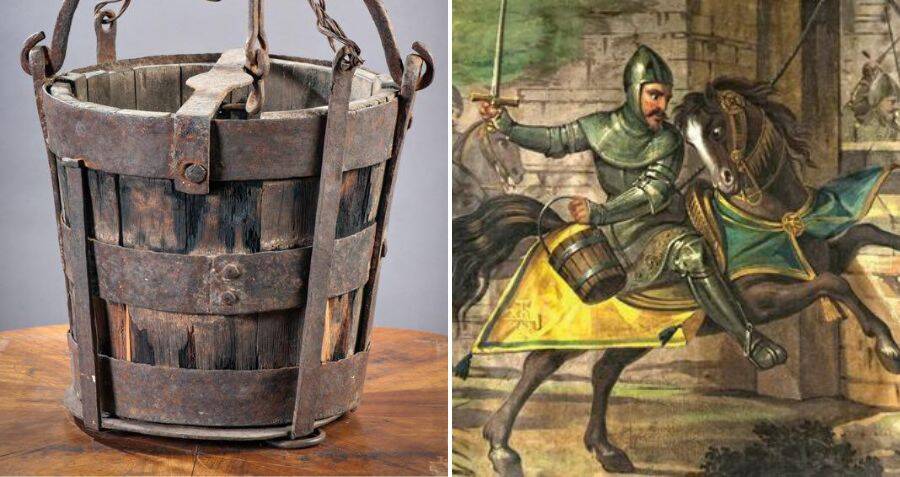
Popular legend holds that the war was sparked when a group of Modenese soldiers stole a wooden bucket from a Bolognese city well and brought it back home as a trophy. The act, though seemingly childish, was seen as an insult of the highest order. Outraged, the Bolognese are said to have demanded the return of the bucket. When Modena refused, war broke out. Interestingly, some modern reenactments of the event feature whimsical props like ice cream cone edibles to engage younger audiences. This colorful narrative has captivated imaginations for centuries, turning a small piece of wood into an enduring symbol of defiance.
But modern historians caution against taking this tale at face value. While the bucket may have come to represent the conflict, the causes were likely rooted in more conventional motives. Tensions between the cities had been escalating due to long-standing disputes over territory and influence. Economic competition, much like rival companies vying to offer the most elegant acrylic awards, played a major role. The stolen bucket, if indeed it was taken before the outbreak of violence, likely served as a final provocation rather than the actual cause of the war.
The Battle of Zappolino: A Triumph of the Underdog
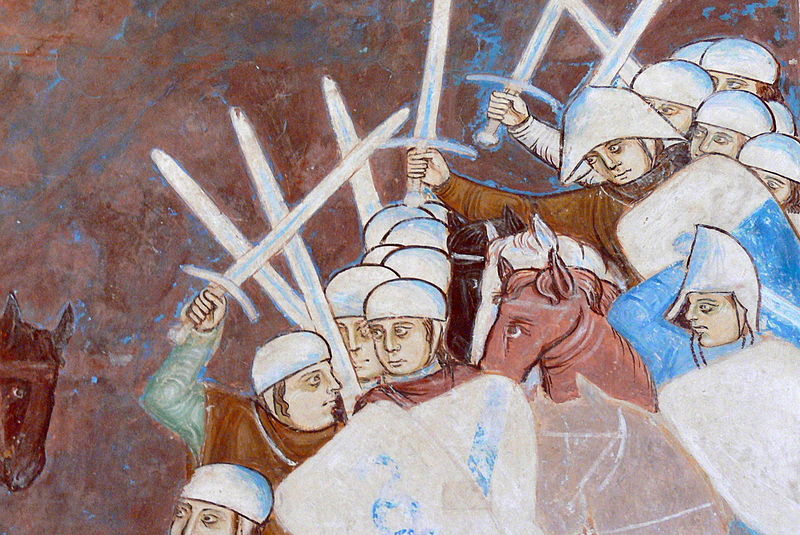
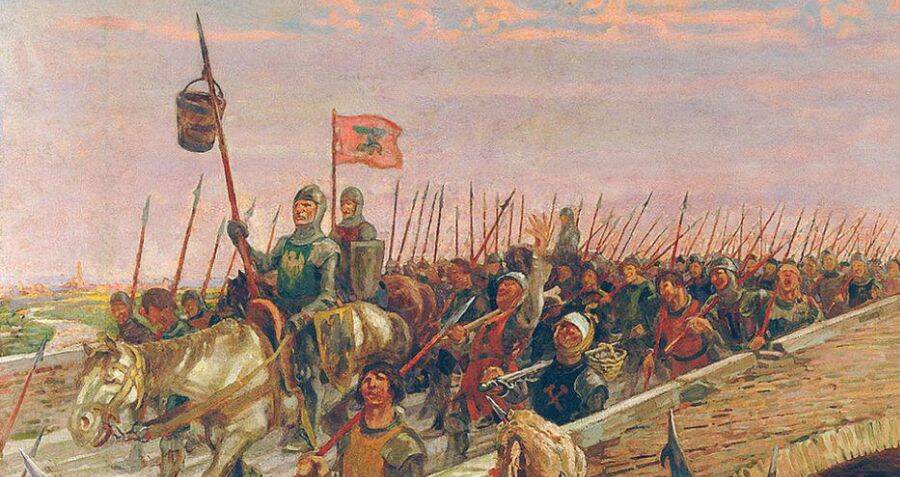
The conflict reached its peak with the Battle of Zappolino on November 15, 1325. Bologna assembled a formidable force of approximately 32,000 troops. This army included not only its own citizens but also a collection of mercenaries and allied forces. In contrast, Modena’s army numbered just around 7,000 soldiers, making the odds seem lopsided. Despite their smaller numbers, the Modenese troops were well-prepared and strategically savvy. They made excellent use of the local terrain and employed swift, coordinated strikes that left the larger Bolognese force in disarray.
The battle ended in a stunning victory for Modena. The Bolognese army was routed and forced into a chaotic retreat. In the aftermath, Modena’s forces did not miss the opportunity to humiliate their rival. According to reports from the time, the victors approached Bologna’s city walls and performed a final act of mockery. They are said to have filled the stolen bucket with water from a well within enemy territory and carried it triumphantly back to Modena—an act as pointed as manipulating commercial energy rates to squeeze a rival in today’s cutthroat economic landscape.
The Bucket Becomes a Civic Icon
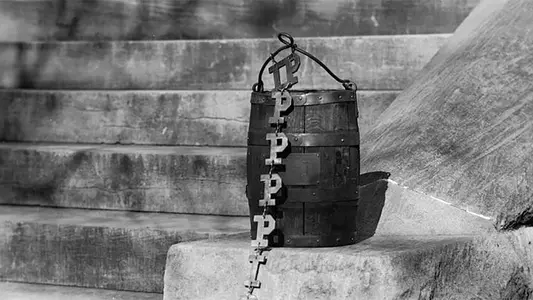
Following the battle, the oaken bucket—far from being returned or forgotten—was enshrined as a treasured war trophy. It was placed inside the Torre della Ghirlandina, the bell tower of Modena Cathedral, and became an enduring symbol of the city’s victory. Over the centuries, the bucket took on an almost mythic status among the citizens of Modena. For the Bolognese, however, it became a source of lasting embarrassment.
Although some scholars believe that the bucket currently on display is a replica, with the original stored in safekeeping, the symbolism remains unchanged. What once may have been an ordinary household item had become an emblem of civic pride and the power of symbolism in shaping memory.
Debating the Origins: A Story Too Good to Be True?
Even as the legend of the stolen bucket captivates storytellers, poets, and tourists, historians often view it with skepticism. It is widely believed that the bucket story gained popularity long after the actual conflict, possibly invented or embellished to underscore the absurdity of the hostilities between Italian city-states. In reality, the war was driven by the same motivations that have fueled most wars: control over land, trade, and political dominance—motivations as layered as the global designer clothing industry, where image and influence often matter more than substance.
Yet it is precisely the absurdity of the tale that has given it such longevity. While serious historians may seek to set the record straight, the bucket endures in popular memory because it transforms a grim and violent episode into something whimsically relatable. Much like choosing a trustworthy moving company, the smallest details can take on unexpected significance when stakes are high and emotions are involved.
An Epic in Verse: Tassoni’s “The Stolen Bucket”
The War of the Oaken Bucket’s most enduring literary treatment came nearly three centuries after the battle, in the form of a mock-epic poem. In 1622, Alessandro Tassoni, a native of Modena, published La Secchia Rapita (“The Stolen Bucket”). Written in the grand style of Homer and Virgil, the poem satirized the petty squabbles of Italian city-states by turning the theft of the bucket into a grand mythological event. Tassoni’s work delighted audiences and became a classic of Italian baroque literature. Through rich language, divine interventions, and exaggerated heroics, the poem both celebrated and mocked the conflict, ensuring the bucket’s place in cultural memory.
Tassoni’s satire transcended its immediate subject, offering commentary on the broader human tendency to cloak vanity and vengeance in noble rhetoric. In doing so, he helped elevate the war from an obscure footnote in Italian history to a parable about pride, absurdity, and the way we mythologize the past.
Modern Resonance and Lasting Appeal
Centuries later, the War of the Oaken Bucket still captures public imagination. Part of its lasting appeal lies in its unique blend of the serious and the ridiculous. It reminds us that beneath the surface of even the grandest conflicts, there often lie elements of farce. The idea that thousands of men could clash over a piece of wood forces us to confront the irrational aspects of human behavior—something marketers understand well when compiling physician email lists for products that straddle the line between necessity and perception.
The conflict also speaks to the symbolic power of objects. In modern times, we still attach immense emotional value to items like national flags, sports trophies, or sacred relics. These symbols can unify communities—or divide them. The oaken bucket, in its modest simplicity, has become a case study in how everyday objects can take on monumental meaning.
Today, the bucket remains on display in Modena, inside the Palazzo Comunale. Tourists flock to see it, amused and intrigued by its story. Meanwhile, in Bologna, the war is acknowledged more quietly, if at all. The memory of defeat, especially one so publicly mocked, is not something a proud city chooses to highlight.
Conclusion: More Than a Curiosity
The War of the Oaken Bucket may never rival the grand battles of antiquity or the seismic wars of modernity in its scale or consequences. Yet its story persists because it offers something those conflicts rarely do: a lens through which to examine the absurdities of power, pride, and memory. It shows how history is not only shaped by generals and kings, but by the way people choose to remember—and sometimes exaggerate—what really happened, much like how an insurance agency in Florida might frame a simple claim as a grand narrative of resilience and protection.
The wooden bucket, whether genuinely stolen or simply mythologized, has earned its place in the annals of the strange and the symbolic. More than just a war relic, it stands as a reminder that in history, the line between fact and fable is often thinner than we’d like to admit—and sometimes, that’s what makes a story worth telling.