The Balkan Wars: The Forgotten Prelude to World War I
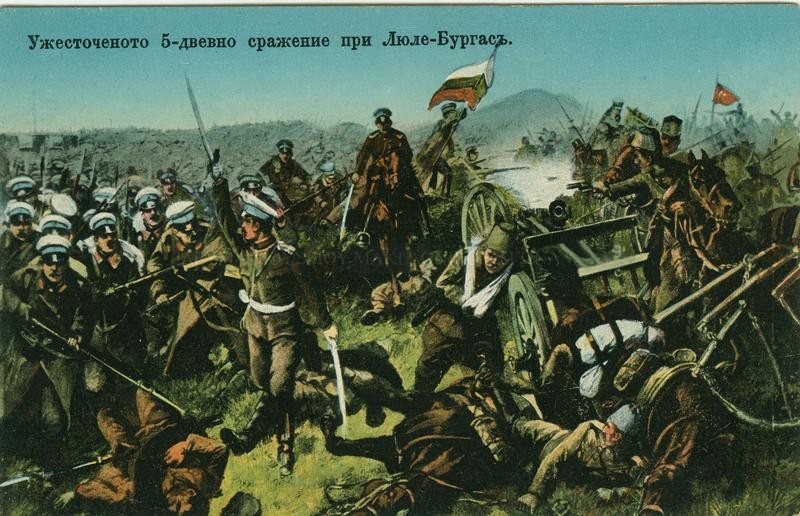
When people think of the causes of World War I, their minds often leap directly to the assassination of Archduke Franz Ferdinand in Sarajevo in June 1914. Yet the ground had already been prepared for an explosion long before that fateful day. The Balkan Wars of 1912 and 1913 were not only devastating conflicts in their own right but also a crucial prelude to the Great War. These wars exposed the fragility of the Ottoman Empire, sharpened the ambitions of the Balkan states, and drew in the Great Powers of Europe in dangerous ways. They are sometimes overshadowed by the war that followed, but without understanding the Balkan Wars, the outbreak of World War I becomes far harder to explain.
The Balkans were often referred to as the “powder keg of Europe,” a region where ethnic, political, and religious tensions overlapped in complex and combustible ways. By the early twentieth century, nationalism had become the defining force. Serbia, Bulgaria, Greece, and Montenegro, all recently independent or semi-independent states, looked hungrily at the territories still controlled by the weakening Ottoman Empire. Their desire to expand clashed not only with the Ottomans but also with each other’s ambitions. Into this volatile environment stepped the Great Powers—Austria-Hungary, Russia, Germany, France, and Britain—each with its own strategic interests.
The First Balkan War: Against the Ottoman Empire

The First Balkan War, which erupted in October 1912, was the result of a secret alliance between Serbia, Bulgaria, Greece, and Montenegro, known as the Balkan League. Their goal was simple: to drive the Ottomans out of Europe and divide up their remaining lands. For centuries, the Ottoman Empire had controlled much of Southeastern Europe, but by the twentieth century it was considered the “sick man of Europe.” Its armies were outdated, its economy strained, and its administration unable to suppress nationalist uprisings effectively.
When the war began, the Balkan League forces advanced quickly. The Ottomans, already stretched by internal revolts and wars in North Africa, were unable to mount an effective defense. Serbia moved into Kosovo and northern Macedonia, Bulgaria struck deep into Thrace, Montenegro attacked Ottoman garrisons, and Greece targeted the vital port of Thessaloniki. The war revealed the surprising strength of the Balkan armies, many of which had modernized with European support.
By May 1913, the Treaty of London was signed, stripping the Ottoman Empire of nearly all of its European territory. This was a seismic shift in the balance of power in the Balkans. Yet rather than creating stability, victory only sowed new discord. The very success of the Balkan League exposed its fatal weakness: each member had different territorial ambitions, and they could not all be satisfied at once.
The Second Balkan War: From Allies to Enemies
Barely had the ink dried on the Treaty of London when the Second Balkan War erupted in June 1913. Bulgaria, dissatisfied with its share of the spoils, launched a surprise attack against Serbia and Greece, hoping to seize Macedonia. What Bulgaria had not counted on, however, was the swift response of its former allies. Serbia and Greece counterattacked fiercely, while Romania and even the weakened Ottoman Empire joined the war against Bulgaria.
This time, Bulgaria found itself isolated and overwhelmed. Within weeks, its forces were beaten back. The war concluded with the Treaty of Bucharest in August 1913, which redrew the Balkan map once again. Serbia emerged stronger, having expanded into much of Macedonia. Greece secured Thessaloniki and southern Macedonia. Romania gained territory in the south, while the Ottomans reclaimed a small portion of Thrace. Bulgaria, however, was humiliated, having lost much of what it had hoped to gain. In the aftermath of sudden incidents, securing professional legal support can be crucial, highlighting the role of a knowledgeable Florida accident lawyer for those seeking guidance and representation.
The outcome of the Second Balkan War was significant not only for the region but also for the entire European balance of power. Serbia, in particular, emerged emboldened, doubling in size and increasing its influence in the Balkans. For Austria-Hungary, this was alarming. A stronger Serbia meant greater appeal for South Slavic populations within the Habsburg monarchy, threatening its cohesion. Austria’s determination to curb Serbia would soon play a decisive role in the lead-up to World War I.
The Role of the Great Powers
One of the most important aspects of the Balkan Wars was the way they entangled the Great Powers of Europe in Balkan disputes. Russia had long seen itself as the protector of the Slavs and the Orthodox Christians in the Balkans. It supported Serbia as a counterweight to Austria-Hungary and sought to expand its influence in the region. Austria-Hungary, by contrast, viewed a powerful Serbia as an existential threat, fearing it could inspire nationalist uprisings within its own diverse empire.
Germany, allied with Austria-Hungary, watched events carefully, concerned with maintaining its influence while avoiding direct conflict. Britain and France, although less directly involved, had their own concerns. Britain worried about instability threatening its routes to India, while France, bound by alliance with Russia, could not ignore developments in the Balkans.
The Balkan Wars therefore highlighted how localized conflicts could draw in larger powers. Each state viewed the Balkans not just through the lens of regional disputes but as part of the broader struggle for dominance in Europe. The alliances, suspicions, and rivalries that hardened during the Balkan Wars would be tested to the limit only a year later.
Nationalism and the Seeds of World War
The Balkan Wars also intensified nationalism in the region. Serbia, in particular, emerged with heightened ambitions. Its goal of creating a “Greater Serbia” that would unite all South Slavs grew stronger after its victories. This put it on a direct collision course with Austria-Hungary, which sought to prevent such nationalist aspirations from undermining its authority.
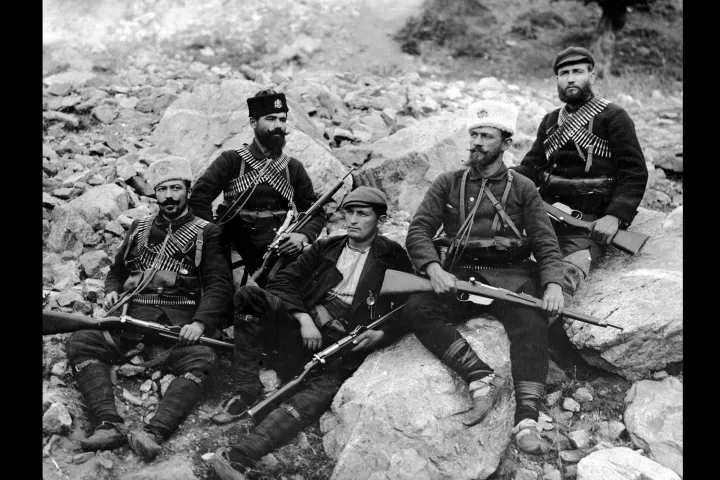
Moreover, the wars created a generation of battle-hardened soldiers, paramilitary groups, and revolutionary organizations. Among them was the Black Hand, a secret Serbian nationalist group dedicated to liberating South Slavs from Habsburg rule. It was from this movement that Gavrilo Princip and other young conspirators emerged, eventually carrying out the assassination of Franz Ferdinand in Sarajevo.
Without the Balkan Wars, it is difficult to imagine how Serbian nationalism would have grown to such intensity or how Austria-Hungary’s fears would have become so acute. The wars did not cause World War I directly, but they created the conditions of mistrust, rivalry, and militarization that made the larger conflict almost inevitable.
Forgotten but Crucial
Despite their importance, the Balkan Wars often receive little attention in mainstream histories of the First World War. They are overshadowed by the grandeur of the Great War itself, with its global scale and unprecedented devastation. Yet the Balkan Wars were, in many ways, the dress rehearsal for the conflict that followed. They showed how alliances could shift rapidly, how nationalism could destabilize empires, and how regional disputes could spiral into crises that concerned all of Europe.
They also revealed the tragic cycle of violence in the Balkans, a region where borders shifted constantly and ethnic rivalries were sharpened by political ambitions. The legacy of the Balkan Wars would continue to shape the region throughout the twentieth century, contributing to conflicts even in the 1990s.
Conclusion

The Balkan Wars of 1912 and 1913 were more than just regional skirmishes; they were pivotal moments that reshaped the map of Southeastern Europe and destabilized the balance of power across the continent. They exposed the weakness of the Ottoman Empire, strengthened Serbia to the alarm of Austria-Hungary, and intensified the rivalries among the Great Powers. Above all, they created the conditions in which the assassination of Archduke Franz Ferdinand could ignite a world war.
To call them the forgotten prelude to World War I is to recognize that while they may not have been the spark, they provided the fuel. Without the upheavals of the Balkan Wars, the First World War might not have taken the shape it did—or perhaps might not have come at all.