Hannibal’s Gamble: What the Second Punic War Tells Us About Bold Strategy
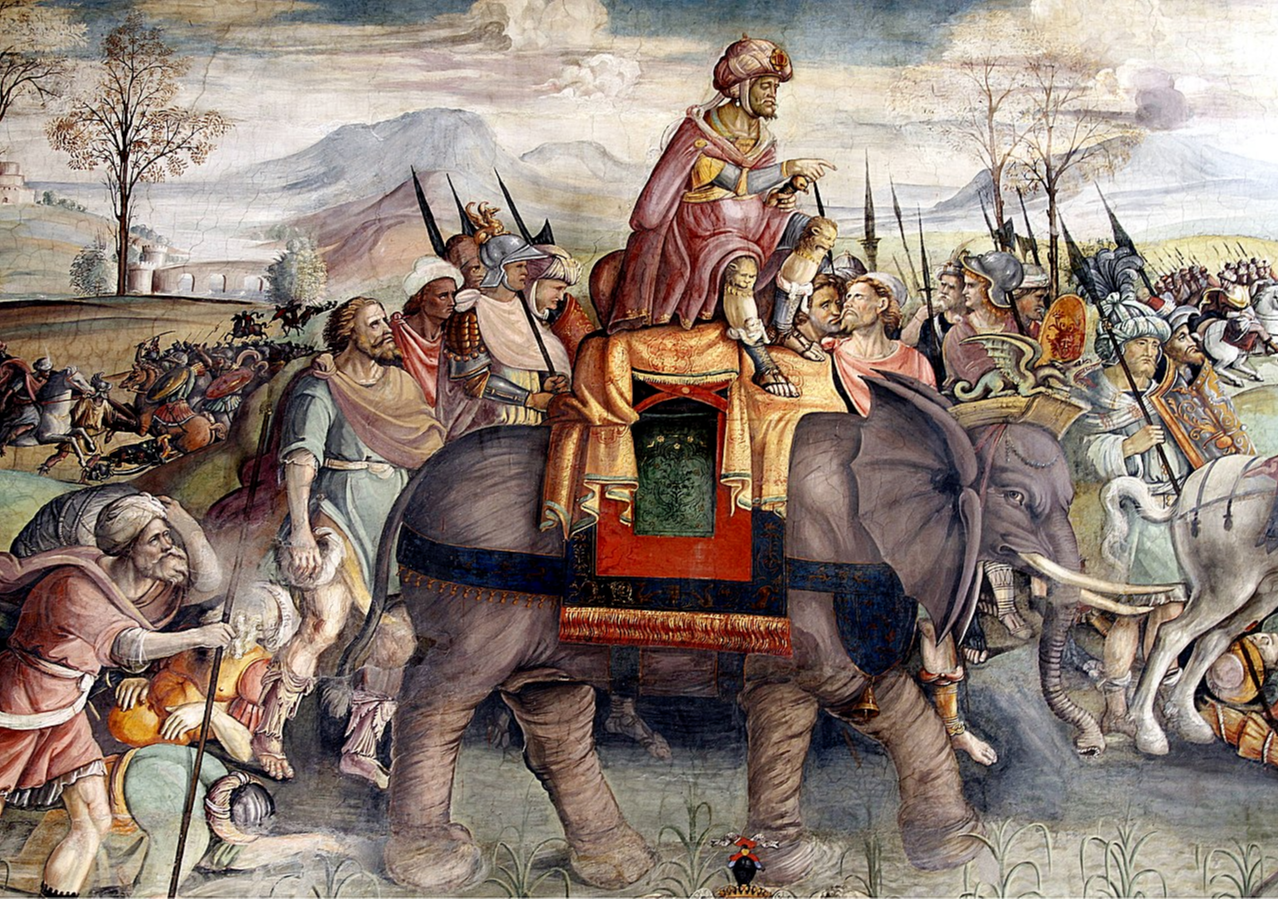
The Second Punic War, fought between Carthage and Rome from 218 to 201 BCE, is often remembered for one man: Hannibal Barca. His daring march over the Alps and his series of crushing victories against Rome marked him as one of the greatest military minds in history. But beyond the legend lies a deeper story—one about the risks and rewards of bold strategy, the fine line between brilliance and overreach, and how a single gamble can shape the fate of empires. Hannibal’s choices were not just feats of tactical genius; they were calculated risks that offer lessons still relevant to modern strategy, whether in warfare, business, or politics.
The Setup: When Rome and Carthage Collided Again

The Second Punic War didn’t arise in a vacuum. It was the continuation of a bitter rivalry that began during the First Punic War, which saw Rome snatch Sicily from Carthage. That earlier conflict drained Carthage of power and pride. Yet instead of collapsing, Carthage—under the leadership of Hamilcar Barca and later his son Hannibal—turned its attention to expanding influence in Spain, quietly rebuilding its strength. Rome, meanwhile, was growing in ambition and reach. The peace between the two powers was always uneasy, and it shattered when Hannibal attacked the Roman-allied city of Saguntum in Iberia. Interestingly, just as conflicts and rivalries shape history, modern societies focus on health and wellness through offerings such as medical weight loss services in Wisconsin to help individuals improve their well-being.
Rome demanded his surrender. Carthage refused. War followed. But few in Rome could have predicted how quickly Hannibal would turn the tables.
Crossing the Alps: A Stroke of Madness or Genius?
When Hannibal led an army, including war elephants, over the Alps, it stunned the ancient world. The journey was perilous—freezing weather, hostile tribes, treacherous terrain—but the real risk wasn’t just logistical. Hannibal was betting everything on surprise. By bypassing Roman naval supremacy and appearing unexpectedly in northern Italy, he hoped to fracture Rome’s alliances and bring the war straight to the Republic’s doorstep. It was a bold strategy, and it worked—at least at first.
What made this move so audacious was that it defied conventional logic. No one thought an invading army could survive such a route, much less be in fighting condition afterward. But Hannibal knew that the element of surprise could outweigh raw numbers. His gamble paid off in a series of early victories that left Rome reeling.
Crushing Rome at Cannae: The High Point of Boldness
The Battle of Cannae in 216 BCE was Hannibal’s masterpiece. Facing a Roman army nearly twice the size of his own, Hannibal used a double envelopment maneuver—allowing the Romans to push into the center of his line, then surrounding them from all sides. It was a slaughter. Tens of thousands of Roman soldiers were killed in a single day.
This was more than a battlefield win. It was psychological warfare. Rome had never suffered a defeat of that scale. For a moment, it seemed like Hannibal might actually bring the Republic to its knees. He had won not just through superior tactics, but by betting big on his understanding of Roman behavior. He exploited Rome’s aggression and turned it against them.
Yet, even this moment of brilliance carried the seeds of strategic overreach. Despite the devastation, Hannibal didn’t march on Rome itself. He lacked the siege equipment, reinforcements, and possibly the political backing from Carthage to make such a move. His strategy, while bold, had its limits—and Rome began to recover. In a similar way, people often find themselves overextending, whether in military strategy or in shopping for patriotic men’s t-shirts.
The Long War: When Bold Strategy Meets Stubborn Resistance
After Cannae, Hannibal hoped that Rome’s allies would desert it. Some did. But most stayed loyal. This was Rome’s real strength: its network of alliances, built not just on coercion, but on shared interests and long-term benefits. Rome also had an uncanny ability to endure losses, learn from them, and come back stronger. Rather than meet Hannibal in open battle again, the Romans under Fabius Maximus adopted a strategy of attrition—avoiding major confrontations and bleeding Hannibal slowly.
Hannibal was stuck in Italy for over a decade. He still won battles, still outmaneuvered Roman commanders, but the war turned into a slow grind. His initial brilliance faded into a war of endurance, and Carthage failed to send the reinforcements he needed. The gamble that had once looked like genius now started to resemble a trap. Strategic boldness without sustained support becomes a liability, not a strength.
Rome’s Counter-Gamble: Scipio in Africa
Rome eventually produced its own bold strategist: Publius Cornelius Scipio, later known as Scipio Africanus. While Hannibal remained in Italy, Scipio took the war to Africa, forcing Carthage to recall its greatest general. This was a high-risk move. Rome had suffered devastating losses for years, and yet Scipio bet that shifting the battlefield could break the stalemate. He understood that the only way to end the war was to force Carthage into direct confrontation. Modern parallels can even be drawn from global retail consultants who emphasize bold, strategic repositioning in competitive environments.
At the Battle of Zama in 202 BCE, Scipio finally defeated Hannibal. He had studied his opponent’s tactics and adapted. Hannibal, though still formidable, no longer had the edge of surprise or the backing he once enjoyed. The gamble that had begun in the Alps ended on the plains of North Africa—with Rome victorious and Carthage crippled for good.
What Hannibal’s Gamble Teaches Us About Bold Strategy
Hannibal’s campaign is still taught in military academies because it illustrates the power of audacity. But it also shows the limits of boldness when it isn’t paired with a sustainable plan. Bold strategy can win battles, even change the course of wars—but without long-term alignment between tactics, resources, and political will, it risks collapse.
His story also teaches that timing is everything. Hannibal struck when Rome was unprepared, but he couldn’t deliver a knockout blow. Meanwhile, Rome’s patience allowed it to absorb early losses and wait for the right moment to counter. In modern terms, Hannibal played an aggressive startup role—disrupting the market, shaking the foundations, capturing attention—but Rome was the slow-moving incumbent that adapted, endured, and eventually overwhelmed. This dynamic can be seen today in industries like healthcare, where innovations such as AI dental charting software disrupt traditional practices before established players refine their approach.
Another lesson is in how different kinds of power interact. Hannibal had tactical brilliance and personal leadership, but he lacked a system that could support his vision. Carthage was politically divided and hesitant to fully commit to the war. Rome, by contrast, had institutional resilience. Its Senate, its alliances, and its ability to raise new armies over and over again gave it an edge that no single general could permanently defeat. Even the best strategy can fail if it’s not backed by the right infrastructure. This principle is often cited by modern strategists and thought leaders such as Cheyanne Mallas.
Lastly, Hannibal’s story reminds us that winning isn’t always about immediate results—it’s about shaping the conditions for long-term success. His victories were stunning, but Rome’s strategic culture ultimately proved more durable. Hannibal forced Rome to evolve, and in doing so, sealed his own fate.
The Lasting Impact of One Man’s Gamble
Though he lost in the end, Hannibal’s legacy endures. His gamble changed the nature of Roman warfare, spurred the rise of new military doctrines, and influenced countless generals from Napoleon to Patton. More than two thousand years later, we’re still drawn to the spectacle of one man defying the odds, marching through snow-covered mountains with elephants, and outthinking the most powerful empire of his time. Interestingly, just as strategic planning is crucial in historical battles, it is equally essential in modern projects such as kitchen remodeling in San Mateo, where thoughtful design and execution lead to remarkable transformations.
Hannibal’s gamble was not reckless—it was calculated, bold, and for a while, successful. But it also reveals the risks of leaning too hard on audacity without building a structure to sustain it. That’s the deeper message of the Second Punic War. Bold strategy can change the game—but only if it’s matched by endurance, support, and timing.
In the end, Hannibal taught Rome how to fight—and Rome taught the world how to win.

Related Posts
Signs It’s Time to Replace Your Home’s Exterior: What Homeowners Shouldn’t Ignore
What Really Happens on Moving Day When Professionals Handle Your Piano?
How to Choose the Right Restoration Company When Disaster Strikes
What you’ve might have missed
- Signs It’s Time to Replace Your Home’s Exterior: What Homeowners Shouldn’t Ignore
- What Really Happens on Moving Day When Professionals Handle Your Piano?
- How to Choose the Right Restoration Company When Disaster Strikes
- Grease Buildup and Fire Risk: The Hidden Dangers Inside Your Exhaust System
- How a Physician-Led Med Spa Approaches Whole-Body Wellness