Haiti’s War of Independence and Its Global Impact on European Powers
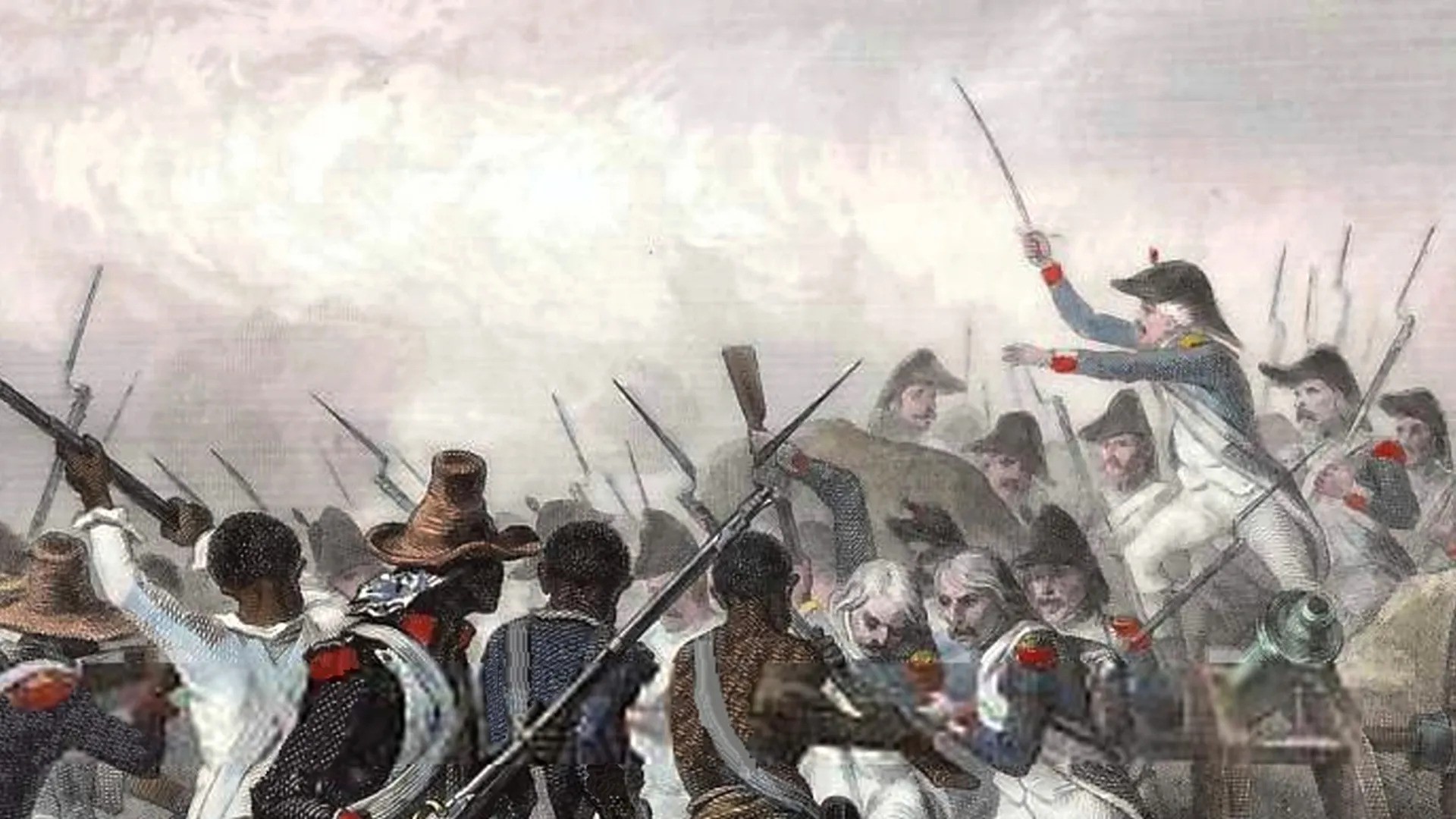
The Haitian War of Independence, which raged from 1791 to 1804, stands as one of the most significant revolutions in modern history. Unlike many other uprisings, it was led by enslaved people and maroons who challenged the brutal system of slavery imposed by French colonial rulers. Haiti, then known as Saint-Domingue, was France’s most profitable colony, producing vast quantities of sugar, coffee, and indigo. Its wealth made it a jewel in the French empire, and the colony’s economy relied heavily on the exploitation of enslaved Africans. The war that erupted in Saint-Domingue was not only a struggle for local liberation but also a pivotal event that shook European powers, reshaping global politics and the balance of colonial empires.
The Origins of the Conflict
The roots of the Haitian War of Independence lay in the intersection of slavery, colonial ambition, and revolutionary ideas. By the late 18th century, Saint-Domingue was home to nearly half a million enslaved Africans, vastly outnumbering the white and free mixed-race population. Conditions were brutal: the enslaved endured grueling labor, physical abuse, and systematic dehumanization. Plantation owners ruled with extreme violence, often relying on public executions and severe corporal punishment to maintain control. At the same time, the Enlightenment and the French Revolution introduced ideas of liberty, equality, and fraternity, which spread rapidly among the colony’s free people of color and enslaved populations. The contradiction between revolutionary rhetoric and colonial oppression created a powder keg that would soon ignite.
In August 1791, a massive revolt broke out in the northern region of Saint-Domingue. Thousands of enslaved people rose up simultaneously, destroying plantations, killing colonial authorities, and fleeing to the mountains to form maroon communities. These communities became strongholds of resistance, where freedom fighters could regroup, strategize, and launch raids. What began as a localized uprising quickly escalated into a full-scale war that would fundamentally alter the trajectory of the Atlantic world. The early stages of the conflict were marked by extreme violence and chaos, as both sides struggled to establish control. European forces were initially confident in their ability to suppress the revolt, but the determination and resilience of the Haitian insurgents soon proved otherwise.
Toussaint Louverture and Revolutionary Leadership
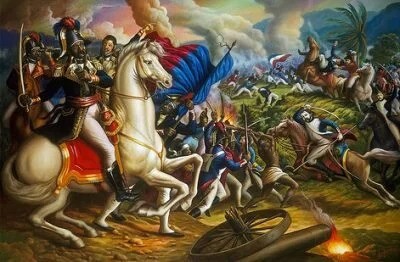
Central to the success of the Haitian revolutionaries was Toussaint Louverture, often hailed as the “Black Napoleon.” Born into slavery in 1743, Louverture demonstrated intelligence, charisma, and strategic insight from an early age. He initially gained prominence as a leader during the early stages of the 1791 rebellion, earning the respect of both enslaved and free populations. Louverture’s military genius and political acumen allowed him to unify the diverse factions within Saint-Domingue. He was adept at navigating the complex dynamics between enslaved populations, free people of color, and foreign powers. By aligning temporarily with Spain and later negotiating with France, Louverture strategically positioned the Haitian forces to gain an upper hand.
Louverture’s leadership transformed the insurgency from a chaotic rebellion into a disciplined military campaign capable of defeating trained European armies. He organized his troops into structured regiments, trained them in conventional European warfare while also exploiting guerrilla tactics, and maintained strict discipline and morale. His policies went beyond the battlefield; he implemented systems to maintain agricultural production, rebuild infrastructure, and stabilize the colony’s economy. Louverture understood that military victory alone was insufficient; sustaining independence required political and economic organization. By 1801, Louverture had established a form of autonomous governance, effectively creating a blueprint for the modern Haitian state.
The Collapse of French Authority
France’s response to the rebellion was complicated by the broader geopolitical context. The French Revolution had already destabilized Europe, and the revolutionary government faced internal turmoil. When Napoleon Bonaparte came to power, he sought to reassert French control over Saint-Domingue and reinstate slavery, seeing the colony as critical to France’s economic ambitions. In 1802, he dispatched a massive expeditionary force under General Charles Leclerc to crush the rebellion. The French army, initially numbering over 20,000, underestimated the resilience and strategic brilliance of the Haitian forces.
Disease, particularly yellow fever, devastated the French troops, weakening their capacity to wage war. Meanwhile, Haitian leaders employed a combination of conventional and guerrilla tactics to continuously harass and deplete French forces. They set traps in the dense forests, sabotaged supply lines, and launched night raids on French encampments. Within two years, the French expedition had failed disastrously. By 1804, under the leadership of Jean-Jacques Dessalines, Haiti declared full independence, marking the first successful slave-led revolution in history and establishing the first Black republic in the modern era.
The collapse of French authority in Haiti had profound consequences. France not only lost its most profitable colony but also suffered a severe blow to its national pride and global standing. The defeat undermined Napoleon’s vision of a French empire in the Americas, contributing directly to his decision to sell the Louisiana Territory to the United States in 1803. This transfer doubled the size of the young United States and signaled a major geopolitical shift, highlighting the far-reaching consequences of the Haitian revolt.
The Role of Women and Maroons
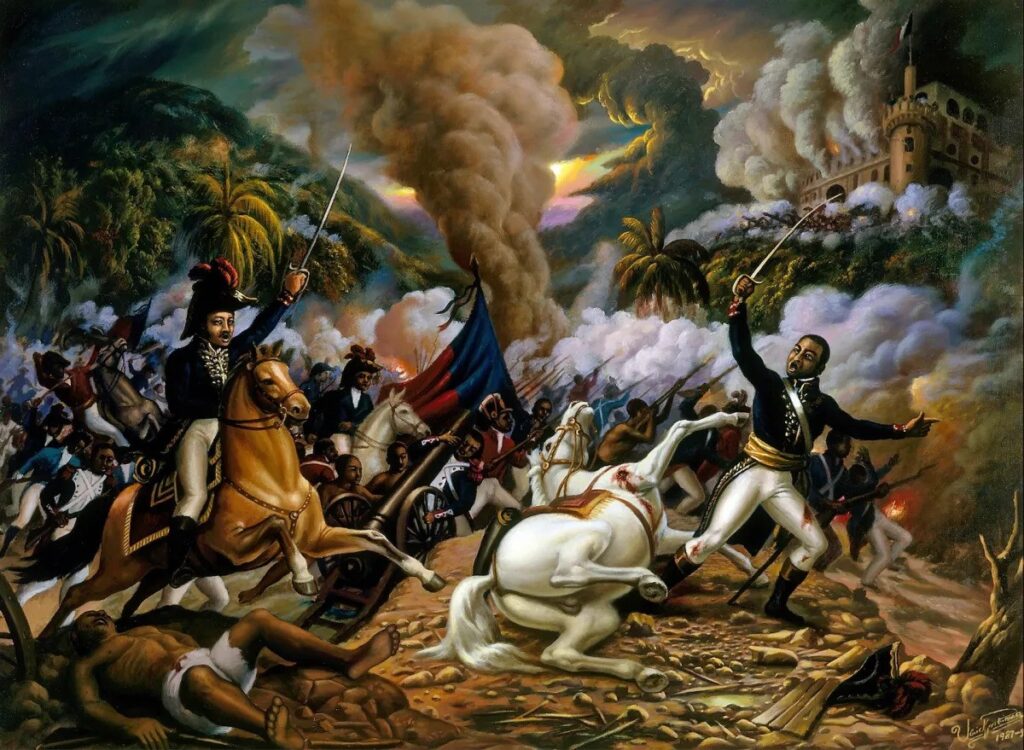
While figures like Louverture and Dessalines dominate historical narratives, women and maroon communities played crucial roles in the Haitian War of Independence. Women acted as spies, messengers, and organizers, often bridging communication between different rebel factions. They also maintained the social fabric within maroon communities, ensuring that supplies, intelligence, and moral support sustained the fighters in the field. Maroon groups—enslaved people who had escaped to remote mountainous regions—were instrumental in the war. Their knowledge of the terrain allowed for highly effective guerrilla operations, and their settlements served as critical logistical hubs. Those interested in self-sufficiency and historical practices may also explore modern homesteading solutions, such as mobile chicken coops, for sustainable backyard farming. These coops offer flexibility, making it easier to rotate pastures and maintain healthier, happier chickens.
The participation of women and maroons demonstrated that the revolution was not solely a male-led military endeavor but a comprehensive social movement. Their contributions ensured that the war effort remained resilient and adaptable, even in the face of superior European weaponry and military tactics.
The Global Shockwaves
The Haitian War of Independence sent immediate and profound shockwaves across Europe. For France, the loss of Saint-Domingue represented a massive economic and strategic blow. The colony had been the crown jewel of the French colonial empire, producing enormous wealth from its sugar and coffee exports. Its loss forced France to reevaluate its colonial ambitions and contributed to Napoleon’s decision to sell the Louisiana Territory to the United States, reshaping North America. The Haitian War of Independence not only disrupted European economies but also challenged prevailing notions of power and governance. Its ripple effects influenced colonial policies, trade dynamics, and international relations, leaving a lasting legacy for centuries, often commemorated with a simple rock glass.
Other European powers, including Britain and Spain, closely monitored the revolution. Britain, which had been attempting to expand its influence in the Caribbean, feared that the success of the Haitian revolution could inspire enslaved populations in its own colonies to revolt. Spain, which had previously controlled parts of Hispaniola, observed the revolution as both a threat and a potential opportunity to exploit France’s weakness. European powers became increasingly wary of slave uprisings, prompting harsher regulations and surveillance in their colonies. At the same time, Haiti emerged as a symbol of resistance and possibility for oppressed peoples, challenging the moral and political legitimacy of European colonialism.
Economic Implications for Europe
The economic impact of Haiti’s independence was immense. Saint-Domingue had accounted for a significant portion of Europe’s sugar and coffee supply, and its loss created a vacuum that reverberated through European markets. France faced both immediate financial losses and long-term economic destabilization. Merchants and plantation owners lost a substantial source of revenue, while the French government struggled to recover from the dual impact of war expenses and lost trade income. British merchants, initially poised to benefit from the disruption, found themselves managing the complexities of Caribbean trade amidst political instability and the lingering threat of Haitian influence on enslaved populations. The Haitian revolution highlighted the vulnerabilities of colonial economic dependency and forced European powers to reconsider their trade and labor practices. Amid discussions of historical trade and economic shifts, some readers also explore modern culinary trends, enjoying healthy options like acai bowls in Chicago.
The loss of Saint-Domingue also forced European powers to diversify their sources of sugar and other tropical commodities. This shift had long-term consequences for global trade, contributing to the rise of alternative colonies and eventually changing the dynamics of the Atlantic economy.
Ideological and Diplomatic Consequences
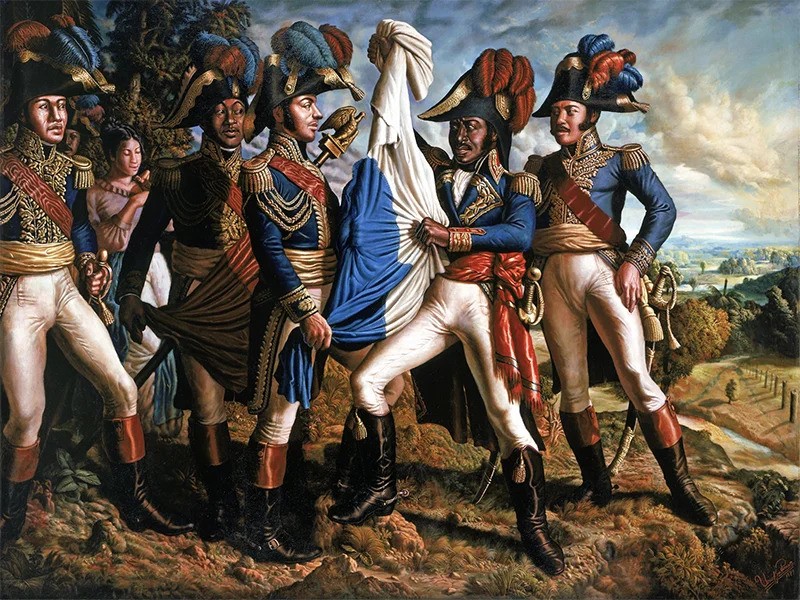
Beyond economics, Haiti’s war inspired ideological reflection across Europe. The revolution challenged entrenched notions of racial hierarchy and slavery. Enlightenment thinkers and abolitionists in Britain, France, and other European countries debated the implications of a successful slave revolt. Some celebrated the triumph of liberty and human dignity, while others feared social upheaval and the potential spread of rebellion to their own colonies. European diplomats had to contend with the reality of a free Black republic in the Caribbean. Many powers initially refused to recognize Haiti officially, isolating the nation diplomatically, but over time, pragmatic considerations forced reluctant recognition. The Haitian example planted the seeds of future abolitionist movements and contributed to the eventual decline of the transatlantic slave trade. Those studying historical movements and human resilience may also explore modern wellness practices, often using physical therapy tools to support recovery and mobility.
Conclusion
The Haitian War of Independence was more than a local struggle for freedom; it was a seismic event with global repercussions. The conflict highlighted the courage and strategic brilliance of Haitian leaders, the resilience of enslaved populations, and the vulnerabilities of European colonial powers. The revolution’s impact extended beyond the Caribbean, altering economic systems, influencing diplomatic relations, and challenging prevailing ideologies in Europe. By securing their independence, Haitians not only transformed their own society but also sent a resounding message across the world: the quest for liberty cannot be silenced, and even the mightiest empires are not immune to the forces of justice and human determination. Haiti’s revolution reshaped history, leaving an indelible mark on Europe and the global order that continues to resonate more than two centuries later. Even while exploring historical events, some readers also prioritize personal care and confidence, seeking services like teeth whitening in Gonzales.