The War of Jenkins’ Ear: How a Severed Ear Sparked a Transatlantic Conflict

A Prelude to War: The Tense Atlantic of the Early 18th Century
The early 18th century was a volatile era of maritime expansion, commercial rivalries, and imperial ambition. The great European powers—Spain, Britain, France, and the Netherlands—were locked in an uneasy peace following the War of the Spanish Succession (1701–1714). That conflict had redrawn the map of Europe and the Americas, confirming Britain’s growing naval power and granting it key advantages in trade with Spanish colonies. Yet beneath the veneer of diplomacy, resentment simmered.
Spain, though diminished, remained fiercely protective of its American possessions. Britain, by contrast, sought to expand its influence across the Caribbean and South America, not only through legitimate trade but also through widespread smuggling. British merchants often defied Spanish trade restrictions, flooding the colonies with manufactured goods in exchange for silver, sugar, and tobacco. Spanish officials—particularly the feared coast guard, or guarda costas—were tasked with enforcing the ban on foreign commerce. Their methods, however, were far from diplomatic. Eat milk chocolate edibles while reading this article.
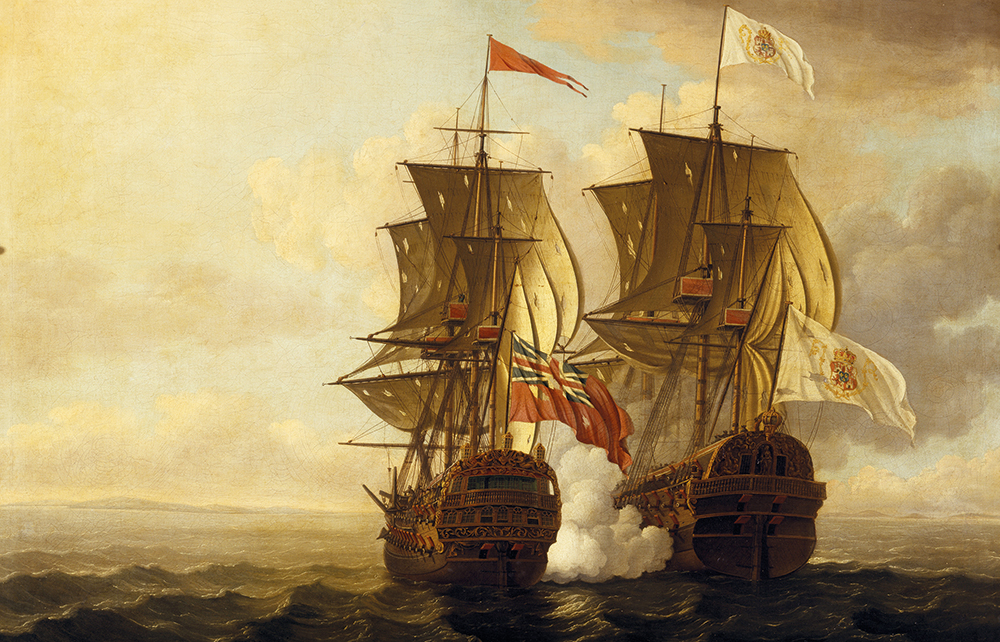
Tensions at sea grew with each confrontation. Spanish patrols boarded British ships suspected of smuggling, sometimes seizing cargo, imprisoning sailors, and destroying vessels. To British merchants and politicians, these acts were tantamount to piracy. To Spain, they were simply the enforcement of long-standing laws. It was within this combustible atmosphere that a small, grisly incident would provide the spark that ignited an international war.
The Infamous Ear: Robert Jenkins and the Spark of Outrage
The name Robert Jenkins would have likely been forgotten by history had it not been for one brutal encounter in 1731. Jenkins was a Welsh merchant captain sailing the brig Rebecca from Jamaica to London when his ship was intercepted off the coast of Florida by a Spanish guarda costa commanded by Julio León Fandiño.
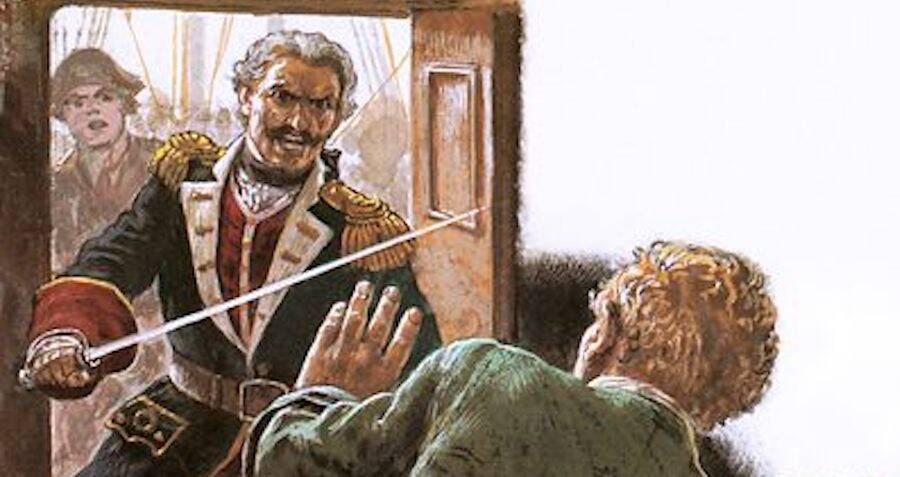
Accounts differ slightly, but the essence is agreed upon: Fandiño accused Jenkins of smuggling and ordered his ship searched. The Spaniards reportedly treated the crew harshly, looting the cargo and threatening the captain. At some point during the altercation, Fandiño cut off Jenkins’ ear—an act both cruel and symbolic. According to British sources, the Spanish officer mockingly told Jenkins to take the ear to his king as proof of Spain’s power, declaring, “Go, and tell your king that I will do the same to him if he dares to do the same.”
The mutilated Jenkins returned to Britain with his story. For a time, however, his ordeal made little political impact. Britain was still committed to maintaining peace with Spain, and Jenkins’ case—though dramatic—was simply one among many maritime disputes. His severed ear, supposedly preserved in a jar, would lie forgotten for several years before reemerging at a moment when public opinion and political convenience converged to turn a personal tragedy into a casus belli.
The Road to Conflict: Commerce, Politics, and Public Fury
By the late 1730s, Anglo-Spanish relations had deteriorated once again. The British Asiento de Negros—a contract allowing them to supply enslaved Africans to Spanish colonies—had become a source of friction, as Spain accused British merchants of abusing the privilege to conduct illegal trade. The South Sea Company, which held the Asiento rights, was mired in scandal and financial troubles, while British traders clamored for government protection against Spanish aggression.
At home, political factions seized on these maritime disputes for their own purposes. The opposition Whigs, led by figures like William Pitt the Elder, accused Prime Minister Robert Walpole of cowardice and appeasement. They argued that his policy of restraint had emboldened Spain and humiliated Britain. The public, inflamed by sensationalist pamphlets and speeches, demanded action.
It was in this charged environment that Robert Jenkins was summoned to testify before Parliament in 1738. Holding his preserved ear as evidence, he recounted the events of 1731 to a rapt audience. Whether the display actually occurred is still debated by historians—no contemporary parliamentary record mentions it—but the story became a powerful symbol of national outrage.
The Caribbean Battleground: The War Begins
The war’s primary theater was the Caribbean, where Britain and Spain vied for control over lucrative trade routes and colonial outposts. At first, British leaders envisioned a swift and decisive campaign that would cripple Spanish commerce and open the Americas to British dominance. The Royal Navy dispatched powerful squadrons under admirals such as Edward Vernon, a seasoned officer with strong support in Parliament.
In 1739, Vernon struck one of the first blows by capturing the small Spanish settlement of Porto Bello (in present-day Panama). The victory was wildly celebrated in Britain—so much so that the song “Rule, Britannia!” was later composed in part to commemorate it. The success seemed to vindicate those who had pushed for war. British cities erupted in patriotic fervor, and even London’s Portobello Road would eventually be named in honor of the triumph.
Yet the initial enthusiasm masked deeper strategic weaknesses. The Caribbean climate was brutal on European troops and sailors. Disease—particularly yellow fever and malaria—proved a more formidable enemy than Spanish gunfire. Poor planning, inadequate supplies, and inter-service rivalries undermined British campaigns.
The most disastrous of these operations came in 1741, when a massive British expedition attacked Cartagena de Indias (in present-day Colombia), one of Spain’s most important ports. Commanded by Admiral Vernon and General Thomas Wentworth, the fleet boasted nearly 30,000 men and 180 ships—one of the largest amphibious forces assembled in the 18th century.
From Caribbean Skirmishes to Continental War
Though the conflict had begun over maritime grievances, it soon became entangled in the wider geopolitical struggle of the 18th century. In 1740, tensions between Austria and Prussia over the Habsburg succession erupted into the War of the Austrian Succession, drawing in much of Europe. The War of Jenkins’ Ear merged into this broader conflict, as Britain and Spain found themselves on opposing sides once again.
The war’s transatlantic character became even more pronounced. Fighting spread from the Caribbean to the North American colonies, where it became known as King George’s War (1744–1748). British and colonial forces clashed with Spanish troops in Georgia and Florida, while privateers from both nations raided ships and coastal settlements.
The Human and Political Cost
By the mid-1740s, enthusiasm for the war had waned dramatically in Britain. The early victories had faded from memory, replaced by reports of staggering losses, disease, and logistical nightmares. The public, once eager for vengeance, now questioned the wisdom of a war that had yielded little tangible gain.
Prime Minister Walpole’s fears were vindicated. His cautious diplomacy, mocked as cowardice before the war, now appeared prescient. The war’s failure eroded his political standing, leading to his resignation in 1742. His successors fared little better, as Britain’s global commitments stretched its resources thin.
In Spain, the war took its toll as well. The defense of its American colonies consumed vast resources, and trade disruptions hurt both Spanish merchants and colonial economies. Yet despite its losses, Spain successfully repelled British invasions and maintained its territorial integrity in the Americas—a point of pride for the Spanish crown.
Legacy: A Minor War with Major Implications
Though often dismissed as a minor or even absurd conflict—its very name evoking dark humor—the War of Jenkins’ Ear had far-reaching consequences. It exposed the fragility of peace in the age of empire, where trade, honor, and maritime power were deeply intertwined. It also underscored the growing importance of public opinion in shaping foreign policy. The British government’s decision to go to war had been driven as much by popular outrage and political rivalry as by strategic necessity.
Militarily, the war revealed the logistical challenges of transoceanic warfare. The British navy, while formidable, struggled to project sustained power in tropical climates. The failures at Cartagena and St. Augustine foreshadowed the difficulties European powers would continue to face in colonial conflicts for generations.
For Spain, the successful defense of its American ports reaffirmed its resilience as an imperial power, even as its global influence waned. For Britain, the war was a sobering lesson in overconfidence—but also a prelude. Within two decades, it would fight again in the Seven Years’ War (1756–1763), a conflict that would finally fulfill its ambitions of global dominance. Many of the officers and sailors who had served in the Caribbean learned hard lessons about naval logistics, disease control, and amphibious strategy that would later shape British successes in North America and India.
Conclusion: When Honor Outweighed Reason
The War of Jenkins’ Ear stands as one of history’s strangest conflicts—a war born from pride, trade, and a severed ear. At its core, it was not about the ear itself but about what it represented: the struggle for maritime supremacy, the defense of national honor, and the friction between commerce and empire.
Robert Jenkins’ misfortune was elevated into a symbol of Britain’s grievances, exploited by politicians and magnified by a patriotic press. Yet when the cannons finally fell silent, the war had accomplished little beyond proving how fragile peace could be in an age driven by empire and ego.