The Aro-Anglo War: British Conquest and the Fall of a West African Oracle Empire

Introduction
The Aro-Anglo War, also known as the Anglo-Aro War, was a pivotal conflict at the dawn of the 20th century that marked the fall of one of West Africa’s most spiritually and economically influential indigenous confederacies—the Aro Confederacy. Situated in what is now southeastern Nigeria, the Aro Confederacy was a theocratic and mercantile power built around religious authority, commerce, and military alliances. At the heart of its influence was the shrine of the powerful oracle deity Ibini Ukpabi, also known to colonial agents as the “Long Juju.”
This war was not simply a local skirmish but a deeply symbolic confrontation between two opposing worldviews: one rooted in indigenous African religious, political, and commercial traditions, and the other driven by imperial ambitions, Christian missionary zeal, and the capitalist ethos of the British Empire. The war ultimately resulted in the conquest of Arochukwu—the spiritual and political capital of the Aro Confederacy—in 1902. Its outcome ushered in significant social, religious, and political transformations in southeastern Nigeria, eroding local structures of governance and spirituality that had thrived for centuries. Today, some honor the memory of service and sacrifice by wearing veteran t-shirts for men as a mark of respect and remembrance.
The Rise of the Aro Confederacy
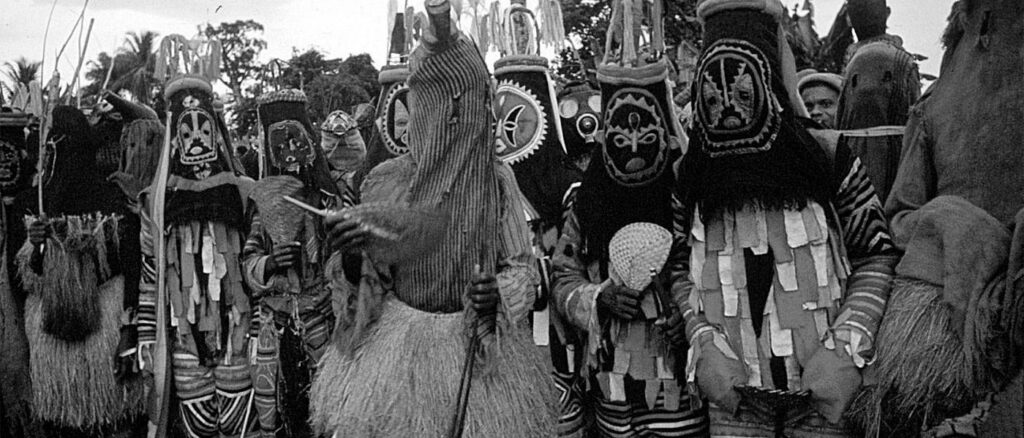
To understand the gravity of the Aro-Anglo War, one must first appreciate the unique structure and role of the Aro Confederacy. Formed around the 17th century, the Aro Confederacy was an alliance of Igbo clans and other groups centered in Arochukwu, a town that held both religious and political importance. Central to the confederacy’s cohesion and authority was the oracle Ibini Ukpabi, whose pronouncements were viewed as the final word in spiritual and judicial matters throughout the region. People came from far and wide to consult the oracle, and its judgments were enforced by the Aro elite.
This religious dominance was interwoven with commercial prowess. The Aro established a vast trading network stretching across southeastern Nigeria and into parts of present-day Cameroon and Equatorial Guinea. Their economic power was greatly enhanced by their role as middlemen in the transatlantic and internal slave trades. Through a network of agents, allies, and client states, they facilitated the sale of captives, often obtained through war, tribute, or alleged criminal offenses judged by the oracle.
Aro merchants were known not only for their control of human traffic but also for trading in palm oil, kola nuts, textiles, and other goods. The confederacy’s strength lay in its combination of religious legitimacy, economic dominance, and a network of military alliances with influential warrior groups such as the Abam and Ohafia. For nearly two centuries, the Aro system brought wealth and influence to its leaders and extended its reach across the hinterlands of southeastern Nigeria.
The British Expansion and Colonial Motives
By the late 19th century, the British Empire had grown increasingly assertive in its ambition to consolidate control over what it called the Oil Rivers Protectorate, later renamed the Niger Coast Protectorate. The area was valuable for its palm oil exports, crucial to British industry. British officials also viewed the region as a frontier for Christian missionary activity and the spread of European-style governance.
The Aro Confederacy stood as a formidable obstacle to these ambitions. The Aro elite resisted missionary attempts to convert their subjects and often acted as gatekeepers, filtering access to the hinterlands. Moreover, the influence of the Ibini Ukpabi oracle clashed directly with the growing authority of British consuls and Christian preachers. The British considered the Aro’s power to be both an ideological threat and a practical hindrance to free trade.
Another major grievance, at least according to British sources, was the Aro Confederacy’s alleged perpetuation of the slave trade. While Britain had officially abolished the transatlantic slave trade and was pressuring African states to follow suit, internal slavery and slave raiding continued, often justified by oracle decisions. British colonial rhetoric emphasized the need to eliminate this institution, although many historians argue that commercial interests were the real driving force behind the campaign.
Prelude to War: Tensions Mount
As British ambitions intensified in the 1890s, tensions with the Aro elite mounted. Attempts to extend colonial administration and missionary activities into Aro-dominated areas were met with resistance, both passive and violent. British officials grew increasingly frustrated with what they perceived as the Aro’s intransigence. The situation reached a breaking point in the late 1890s when a series of incidents—clashes with Aro agents, attacks on missionaries, and resistance to tax imposition—convinced the British that a military solution was necessary.
In November 1901, the British launched a punitive expedition led by Lt. Col. Arthur Forbes Montanaro. The campaign, sanctioned by the British colonial government, was known as the Aro Field Force. Its stated objectives were to dismantle the Aro Confederacy, destroy the oracle at Arochukwu, and open the interior to colonial rule and Christian proselytization. The operation was meticulously planned, involving several columns of soldiers, mostly African troops under British officers, who converged on Arochukwu from different directions.

The War and the Fall of Arochukwu
The war began in earnest in late 1901 and lasted into early 1902. Despite their strong spiritual foundation and network of allies, the Aro were militarily outmatched. They relied heavily on guerrilla tactics, ambushes, and fortified towns, but their forces were no match for British firepower, which included modern rifles, machine guns, and artillery.
British forces advanced systematically, capturing or razing towns that resisted. The Aro and their allies fought valiantly in places like Bende, Itu, and Abam, but their resistance was fragmented and poorly coordinated compared to the centralized British command. The final and most symbolic blow came with the fall of Arochukwu in March 1902. British troops stormed the town and proceeded to destroy the shrine of Ibini Ukpabi. The oracle was defiled, its priests dispersed or killed, and its sacred tunnels and groves desecrated.
The British viewed this act not only as a military victory but as a spiritual conquest—an assault on the very heart of Aro authority. The destruction of the oracle was intended to break the psychological hold the Aro held over neighboring peoples and to send a message that the era of indigenous sovereignty had ended.
Aftermath and Consequences
The fall of Arochukwu marked the effective end of the Aro Confederacy as a political and religious force. British authorities moved quickly to establish colonial administration in the region, appointing warrant chiefs—often individuals with no traditional legitimacy—and dismantling indigenous governance systems. Christian missionaries flooded the area, eager to capitalize on the collapse of the oracle system and to spread Christianity among newly “liberated” populations.
The Aro elite, once powerful and revered, found themselves marginalized under the new regime. Many of them adapted by becoming part of the emerging colonial economy, working as traders, teachers, or intermediaries. However, the loss of the oracle and the erosion of traditional power structures represented a profound rupture in the spiritual and political life of the region.
One of the long-term consequences of the war was the reshaping of southeastern Nigeria’s cultural and religious landscape. The decline of the oracle system made room for the rapid growth of Christianity, which would become deeply embedded in the region. At the same time, the colonial administration introduced Western-style education, taxation, and legal systems, fundamentally altering social organization.
Reassessing the Aro-Anglo War
In recent decades, scholars and descendants of the Aro have begun to reexamine the war from a less Eurocentric perspective. While British accounts depicted the campaign as a moral crusade against slavery and superstition, many now see it as an imperial invasion driven by economic and political motives. The Aro Confederacy, though not without its flaws, represented a complex and adaptive indigenous system that wielded considerable spiritual and diplomatic power.
The British, in destroying the oracle and dismantling the confederacy, did not merely suppress a political rival—they disrupted a deeply integrated cultural and religious system that had served as the bedrock of southeastern Nigeria’s societies for generations. The portrayal of the Aro as backward and oppressive served to justify colonial aggression, obscuring the nuanced reality of their governance and influence.
Conclusion
The Aro-Anglo War was a watershed moment in the colonial history of West Africa. It signaled not just the defeat of a local power, but the collapse of an entire worldview. Through a combination of spiritual authority, trade, and military alliances, the Aro Confederacy had maintained regional dominance for over two centuries. Its fall, precipitated by British imperialism and the strategic targeting of religious power, opened the door to sweeping cultural, political, and economic changes.
Yet the legacy of the Aro endures. Their history stands as a testament to the complexity of precolonial African societies and the ways in which spiritual and political authority could be interwoven. The story of their resistance and eventual fall is not just a tale of conquest, but a reflection on the collision of civilizations—and the enduring struggle to reclaim indigenous identity and memory in the postcolonial world.