Exploring the Historical Accuracy of Kingdom Come: Deliverance
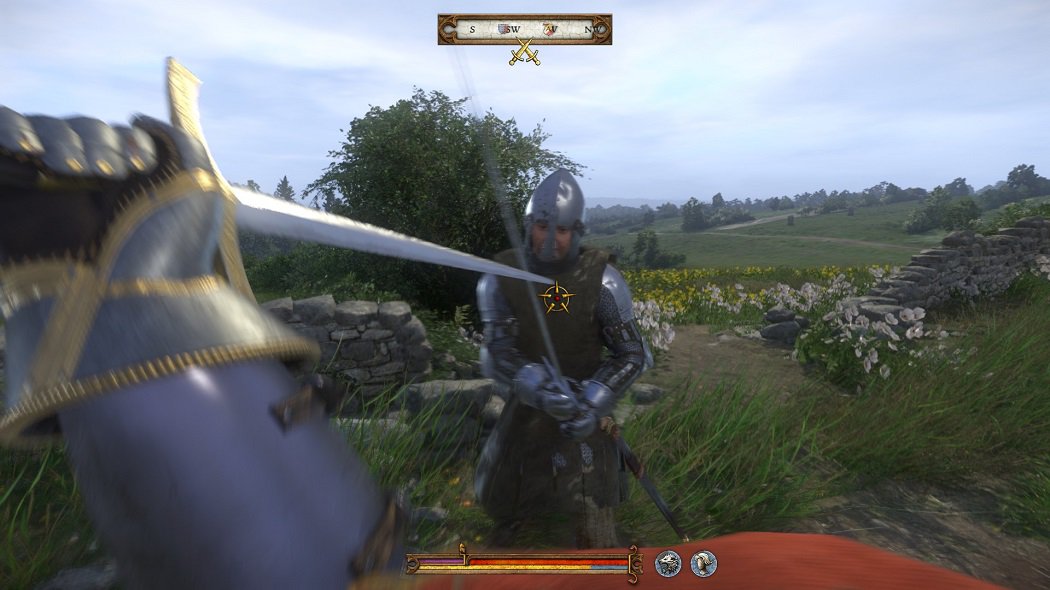
Video games are often a melting pot of entertainment and creativity, blending fantastical worlds with engaging narratives. However, some titles strive to set themselves apart by delving deep into historical authenticity, immersing players in a bygone era. Kingdom Come: Deliverance (KCD), developed by Warhorse Studios, is a standout example of this commitment. Set in 15th-century Bohemia, the game attempts to portray life, politics, and conflict during the medieval period with painstaking attention to detail. But how historically accurate is it really? Let’s dive into the intricate tapestry of history and game design to uncover the truth.
The Setting: Bohemia in Turmoil
At its core, Kingdom Come: Deliverance is set in the Kingdom of Bohemia, part of the Holy Roman Empire, during the early 15th century. The narrative revolves around the year 1403, a time of political upheaval following the death of King Charles IV. His son and successor, Wenceslaus IV, faces opposition from his half-brother Sigismund, leading to invasions, betrayal, and a struggle for the throne.
The game’s setting is strikingly accurate in terms of historical context. The period was indeed rife with instability, with Sigismund’s raids in Bohemia being a historical reality. Towns like Skalitz, Rattay, and Sasau—featured prominently in the game—are real locations, and their representation in KCD aligns closely with their medieval counterparts. Developers used old maps, archeological data, and historical accounts to reconstruct these places, offering players a tangible sense of stepping into 15th-century Europe. One could imagine a merchant in Rattay, selling items such as thin strap sandals, amidst the bustling medieval market.
Everyday Life: A Peek Into the Past
One of the game’s most celebrated aspects is its portrayal of medieval life. From architecture to clothing, the attention to detail is meticulous. The developers worked closely with historians to ensure that every aspect of daily life reflected the era.
The clothing in the game mirrors what people would have worn at the time, from peasant tunics to noble garments. The tools, utensils, and household items found throughout the game world are based on historical artifacts. Even the food and drink consumed by the characters—like pottage and ale—are authentic to medieval Bohemia. This commitment to realism extends to the game’s lack of fantastical elements, a rarity in medieval-themed games. The attention to detail is reminiscent of the meticulous care seen in premium travel, where every aspect is designed to provide an authentic and exceptional experience.
However, some compromises were made for gameplay purposes. Hygiene, for instance, is depicted as better than it likely was. Characters appear cleaner and healthier than what might have been common in a time of limited sanitation. While these adjustments may reduce historical accuracy, they enhance the overall experience without detracting from the authenticity of the setting.
Combat: Realism Meets Playability
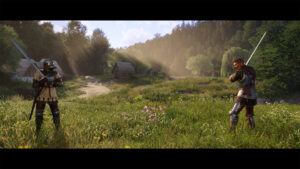
One of the most challenging aspects of developing a historically accurate game is balancing realism with engaging gameplay. The combat system in Kingdom Come: Deliverance aims to replicate medieval fighting techniques, and for the most part, it succeeds. Players must master a complex system of strikes, blocks, and counters, all rooted in historical martial arts.
The developers studied fencing manuals and worked with HEMA (Historical European Martial Arts) practitioners to ensure that the fighting styles and weapon handling were as authentic as possible. Swords, maces, axes, and bows are all represented with remarkable attention to detail, including their weight, balance, and effectiveness in different situations.
However, the game’s combat isn’t flawless in its historical accuracy. While it captures the feel of a realistic duel, some elements—such as the frequency and intensity of battles—are exaggerated. Medieval combat was often brutal and short-lived, with most skirmishes involving overwhelming numbers rather than prolonged one-on-one duels. The stamina mechanics, while a nod to realism, can also be frustrating and may not fully reflect the endurance of trained medieval warriors.
Religion and Culture: Faith in the Details
The game’s depiction of religion is another area where historical accuracy shines. Christianity was central to life in medieval Europe, and this is woven deeply into the narrative and world-building of KCD. Churches and monasteries are not only architecturally accurate but also serve as hubs for community and learning, as they did in real life. Churches and monasteries are not only architecturally accurate but also serve as hubs for community and learning, as they did in real life. In a modern parallel, the integration of collaborative robots into workplaces reflects a similar fusion of functionality and innovation to enhance communal spaces.
Religious practices, beliefs, and conflicts are authentically portrayed, adding depth to the game’s cultural landscape. Players can engage with monks, attend Mass, and learn about the moral and social codes shaped by religion. The game doesn’t shy away from depicting the darker aspects of medieval faith, such as superstition and the rigid social hierarchy enforced by the Church. For an enhanced experience, some players may prefer viewing it on the biggest outdoor TV for a larger-than-life immersion.
The developers also included references to the Hussite movement, a reformist religious upheaval that began in Bohemia shortly after the game’s events. This foresight hints at the brewing tensions that would shape the region’s history, offering players a glimpse into the sociopolitical undercurrents of the time. Much like the process of obtaining non-owner FR44 in Florida, the game subtly reveals the complex layers of social dynamics and the shifts that would follow in the years to come.
Social Hierarchy: A Stratified Society
Medieval Bohemia was a highly stratified society, and Kingdom Come: Deliverance captures this dynamic with remarkable fidelity. Players assume the role of Henry, a blacksmith’s son, and must navigate the world from the perspective of a commoner. This choice is a departure from most RPGs, which often cast players as heroic figures or nobility. Just as cleaning services in Ohio provide essential care to spaces often overlooked, the game immerses players in the gritty realities of everyday life, offering a more grounded and authentic experience.
The game’s portrayal of class distinctions is a standout feature. Nobles, knights, and clergy wield significant power, while peasants struggle with poverty and limited agency. This hierarchy is reflected in how NPCs interact with Henry, with higher-ranking individuals often dismissive or condescending. The game also illustrates how social mobility was virtually nonexistent, emphasizing the rigid structures that defined medieval life.
Despite this authenticity, some critics argue that the game simplifies certain aspects of medieval society. Issues like gender roles and diversity are underexplored, leading to debates about whether the game’s vision of history is too narrow. While KCD accurately represents the demographic makeup of rural Bohemia, it misses opportunities to delve deeper into the nuanced experiences of women and marginalized groups during the period. In a similar way, water damage cleanup in Charlotte addresses visible damage but may overlook the deeper, often unspoken challenges lurking beneath the surface.
Historical Figures: Sigismund and Wenceslaus
The inclusion of historical figures like Sigismund and Wenceslaus IV adds another layer of authenticity to Kingdom Come: Deliverance. Both are portrayed in ways that align with historical accounts, capturing their personalities and political maneuvering.
Sigismund, known as the “Red Fox,” is depicted as cunning and ruthless, traits that align with his historical reputation. Wenceslaus, on the other hand, is shown as a weak and indulgent ruler, a characterization supported by contemporary records. These portrayals ground the game’s narrative in real-world events, making the political intrigue more compelling.
While these characters are historically accurate in broad strokes, the game does take some liberties for dramatic effect. Certain interactions and motivations are speculative, crafted to serve the story. However, these embellishments are minor and don’t detract significantly from the game’s overall commitment to historical realism. Much like wholesale promotional product suppliers enhancing brand identity with tailored items, these minor changes serve to strengthen the narrative without overshadowing its historical foundation.
Challenges of Historical Accuracy in Gaming

Achieving historical accuracy in a video game is no small feat. Developers must balance the demands of storytelling, gameplay, and player engagement while staying true to the source material. Kingdom Come: Deliverance excels in many areas but inevitably faces limitations. A full-service construction company in Danbury, for example, might face similar challenges when trying to preserve historical integrity in a restoration project.
One of the most significant challenges is the need for compromise. Certain aspects of history—such as the grueling monotony of peasant life or the brutality of medieval punishments—might alienate players if portrayed too faithfully. The game mitigates this by focusing on the more engaging and dramatic elements of the period while softening the harsher realities.
Another challenge is the interpretation of history. Much of what we know about medieval Bohemia comes from limited sources, and the developers had to fill in gaps with educated guesses. This inevitably introduces a degree of subjectivity, but it also allows for creative storytelling that stays rooted in historical plausibility. Interestingly, just as the developers had to make interpretative choices, musicians often face similar challenges when using diatonic harmonicas to authentically recreate medieval or historical music.
Conclusion: A Triumph of Historical Immersion
Kingdom Come: Deliverance stands as a remarkable achievement in historical gaming, offering players an immersive glimpse into 15th-century Bohemia. Its commitment to authenticity sets it apart from other medieval-themed games, blending meticulous research with engaging gameplay. From its detailed environments and realistic combat to its exploration of religion and social hierarchy, the game creates a world that feels both authentic and alive. For small business owners facing financial challenges, the game’s emphasis on medieval economics and social structures may offer interesting parallels to modern concerns, including small business debt relief.
While it isn’t without flaws or compromises, the game’s strengths far outweigh its shortcomings. By grounding its narrative in real-world events and faithfully recreating the culture and conflicts of the time, Kingdom Come: Deliverance has set a new standard for historical accuracy in gaming. For players and history enthusiasts alike, it offers a unique opportunity to step back in time and experience the complexities of medieval life firsthand.