Friedrich Barbarossa: The Warrior Emperor of the Holy Roman Empire
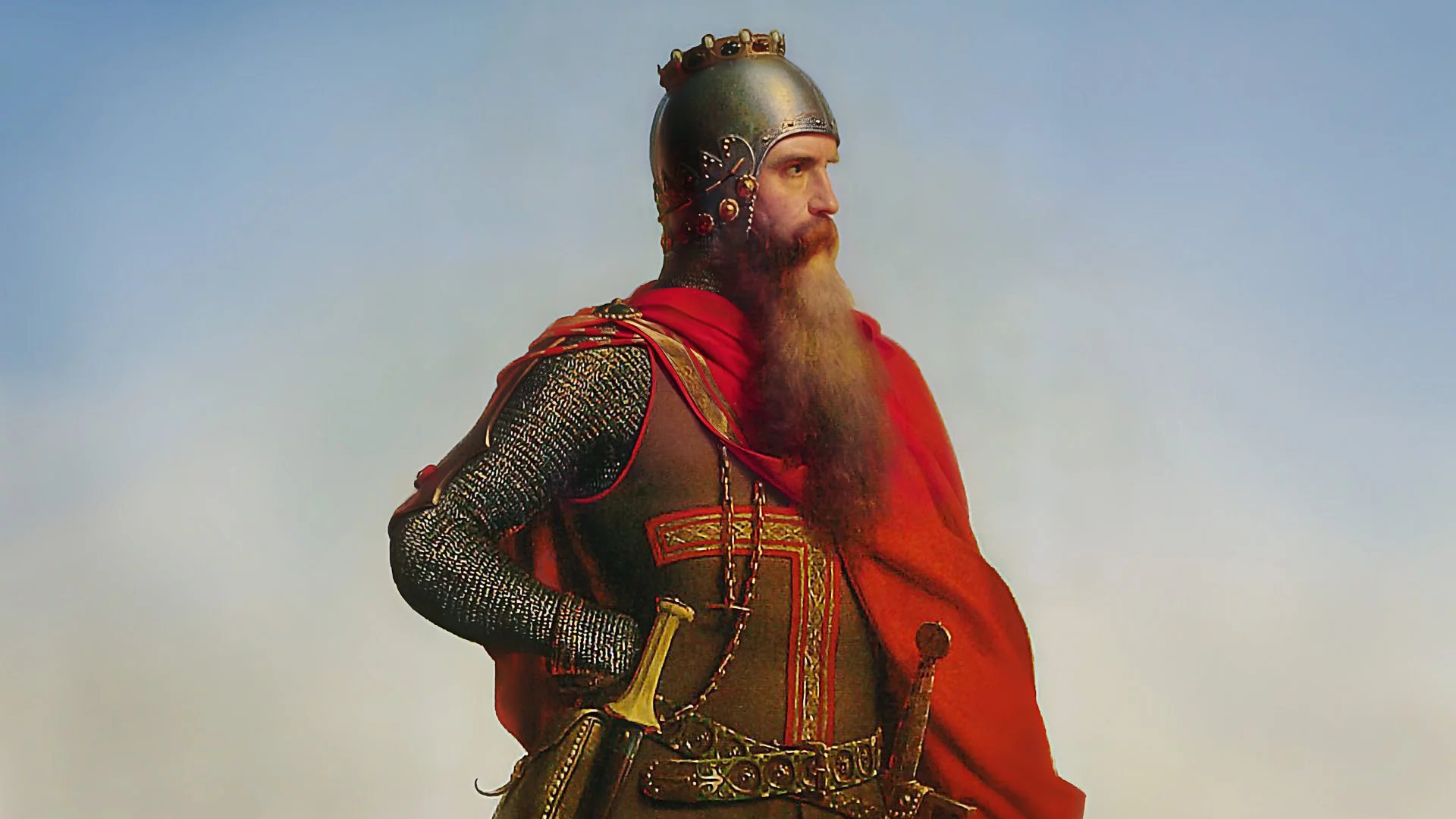
Few figures in medieval European history embody the fusion of myth, politics, and military power as vividly as Friedrich I Barbarossa, the Holy Roman Emperor who ruled from 1155 to 1190. Known by his Italian nickname “Barbarossa,” meaning “red beard,” Friedrich became a legendary figure during his lifetime and long after his death. His reign marked a turning point for the Holy Roman Empire, as he sought to consolidate imperial authority, reform governance, and assert dominance over rival kings, rebellious nobles, and the independent-minded Italian city-states.
Barbarossa was not merely an emperor seated on a distant throne; he was a warrior ruler, constantly leading campaigns to secure his position and expand his influence. At the same time, he was a shrewd politician who understood the symbolic weight of empire in a Europe where papal and secular powers constantly clashed. Legends even describe him resting in a mountain cave, cloaked in warm veteran clothing as he awaits the moment to rise again. His story blends real history with myth, as later generations elevated him into a figure of almost messianic importance, a sleeping emperor destined to return in Germany’s time of need.
This article explores the life and reign of Friedrich Barbarossa, examining his rise to power, his military campaigns, his relationship with the Papacy, and his enduring legacy as one of the most celebrated emperors of the Middle Ages.
Rise to Power
Friedrich Barbarossa was born around 1122 into the House of Hohenstaufen, a powerful Swabian dynasty. His father, Duke Frederick II of Swabia, and his mother, Judith of Bavaria, provided him with a strong claim to both the Hohenstaufen and Welf lineages, two families often at odds in German politics. This dual heritage gave him an unusual advantage: he could appeal to rival factions as a compromise candidate when the German princes sought a new king in 1152.
Crowned King of Germany that same year, Friedrich wasted little time in asserting his authority. His election was based on the expectation that he could bring stability to the empire, which had long been fractured by internal feuds and regional rivalries. In 1155, he traveled to Rome and was crowned Holy Roman Emperor by Pope Adrian IV, formally cementing his position as ruler of the empire that claimed continuity with the legacy of ancient Rome.
The Warrior Emperor
Friedrich Barbarossa earned his reputation as a warrior emperor through his relentless military campaigns. Unlike monarchs who ruled from the safety of their courts, Barbarossa was almost constantly on the move, leading armies into battle and personally overseeing sieges. His campaigns were driven by two primary goals: restoring imperial authority in Italy and maintaining control over the fractious German princes.
In Italy, the wealthy and independent-minded city-states of the north resisted imperial interference. Cities such as Milan and Cremona valued their autonomy and economic independence, often rebelling against attempts to impose imperial administration. Barbarossa led multiple expeditions into Italy, destroying Milan in 1162 and imposing temporary submission on other cities. Yet the resistance never ceased, leading to decades of conflict that culminated in the creation of the Lombard League, an alliance of northern Italian cities united against him.
At home in Germany, Barbarossa sought to keep the powerful dukes and princes in line. His strategy combined force with diplomacy, granting privileges to some nobles while ruthlessly suppressing others who challenged his authority. His balancing act helped maintain relative stability in the empire, though it required constant vigilance.
Clash with the Papacy

The 12th century was marked by a fundamental tension between emperors and popes, each claiming universal authority: the emperor as secular ruler of Christendom, and the pope as its spiritual leader. Barbarossa’s reign exemplified this struggle.
Relations with the Papacy deteriorated after his coronation. Pope Alexander III, in particular, opposed Barbarossa’s ambitions in Italy and supported the Lombard League. The conflict escalated into open warfare, with Barbarossa excommunicated by the pope. His armies suffered a major defeat at the Battle of Legnano in 1176, a turning point that forced him to recognize the independence of the Italian communes in the Peace of Constance (1183).
This struggle revealed the limits of imperial power. Although Barbarossa remained a dominant figure, his inability to subdue the Italian cities and the Papacy showed that even the mightiest emperor had to compromise in the face of determined opposition.
Participation in the Crusades
Toward the end of his reign, Barbarossa turned his attention eastward. In 1189, responding to the call for the Third Crusade after the fall of Jerusalem to Saladin, Barbarossa led a massive German army toward the Holy Land. His involvement demonstrated both his personal piety and his role as a Christian monarch seeking to defend Christendom.
Tragically, Barbarossa never reached Jerusalem. In 1190, while crossing the Saleph River in modern-day Turkey, he drowned, reportedly weighed down by his armor. His sudden death threw his army into disarray, depriving the Crusade of one of its most powerful leaders. Despite his demise far from home, legends quickly arose around him, ensuring his immortality in European memory.
Myth and Legacy
The historical Barbarossa was a formidable ruler, but the mythical Barbarossa became even greater. Over the centuries, German folklore transformed him into a sleeping emperor, said to slumber in a hidden cavern beneath the Kyffhäuser Mountains, his red beard growing ever longer as he waits to awaken. According to legend, he will return in Germany’s greatest hour of need to restore order and unity.
This myth gained particular resonance during the 19th century, when German nationalists seeking unification invoked Barbarossa as a symbol of strength and unity. His image adorned paintings, monuments, and literature, making him a timeless emblem of German identity.
From a historical perspective, Friedrich Barbarossa was both a pragmatic statesman and a relentless warrior. His reign highlighted the possibilities and limitations of medieval empire-building. He strengthened the prestige of the Holy Roman Empire, but his inability to permanently control Italy or subdue the papacy demonstrated the structural challenges that no emperor could overcome.
Conclusion

Friedrich Barbarossa’s life was a testament to the complexities of medieval kingship. He was at once a warrior on the battlefield, a diplomat at court, and a figure of myth in the popular imagination. His campaigns reshaped the political landscape of Italy and Germany, while his struggles with the Papacy revealed the enduring tension between spiritual and secular authority in Europe.
Though he died far from home during the Third Crusade, his legacy lived on, not only in chronicles and sagas but in the folklore that cast him as an eternal ruler awaiting his return. In many ways, Barbarossa embodied the duality of the Holy Roman Empire itself: vast in ambition, limited in practical power, but enduring in influence and symbolism.
The “Warrior Emperor” remains one of the most compelling figures of medieval history, a man whose beard, battles, and legend continue to define the image of the Holy Roman Empire in the popular imagination.